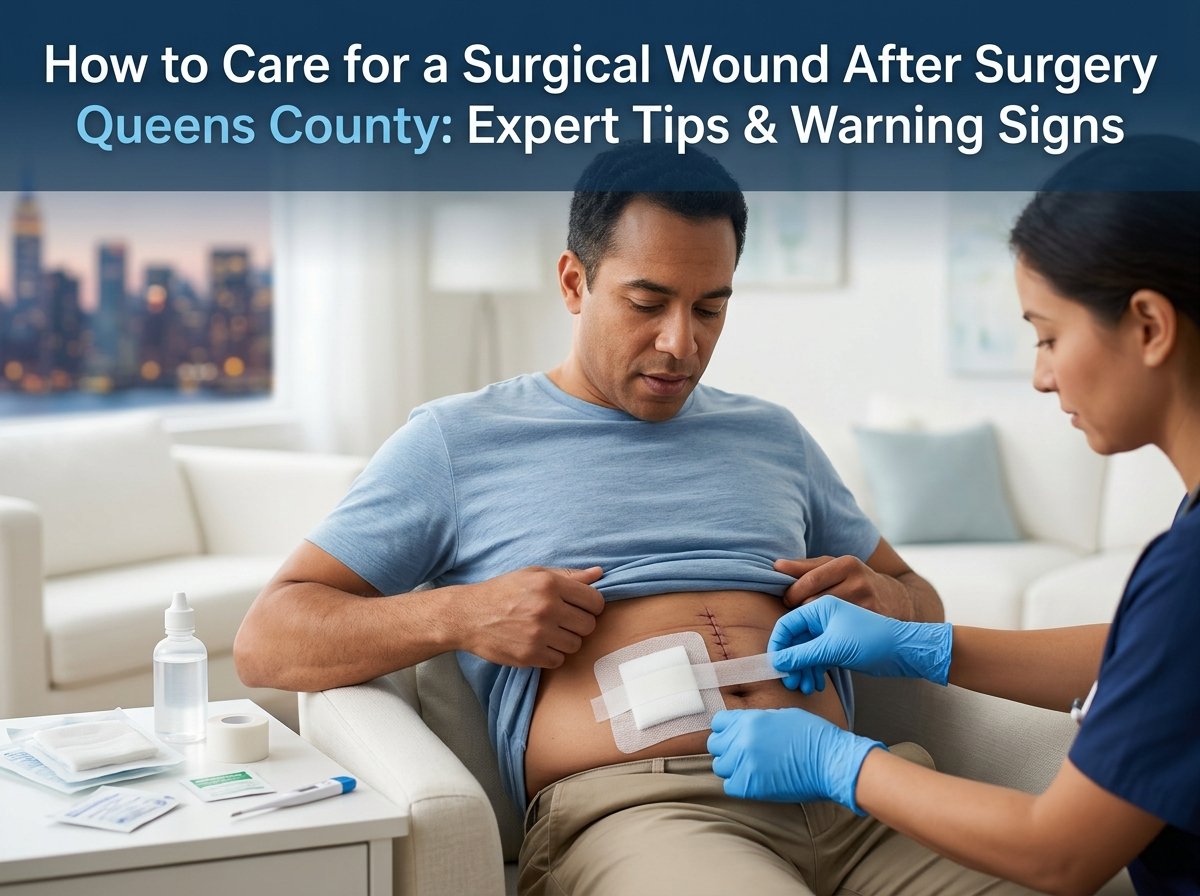
The time spent at the hospital is a great step towards recovery, but healing does not end when you come back home. Proper wound care after surgery in Queens County is an important factor in minimizing your chance of infection, boosting tissue repair processes, and enabling the body to heal as it should. Simple tasks, like forgetting to perform dressing changes or addressing reddening around the wound, can greatly delay recovery.
Education on incision care, what healing looks like, and how to identify warning signs in the early stages of recovery can assist you throughout the healing process. No matter if stitches, staples, or surgical glue are used, following a proper care routine aids in protecting the wound.
This guide explains everything you need to know about caring for a surgical wound at home, including cleaning techniques, dressing changes, healing stages, and when it is time to call your healthcare provider.
Why Proper Wound Care Matters After Surgery
Every surgical incision creates an opening that your body must repair. The wound area is most sensitive during the first few days following surgery, as bacteria can infest before the skin has fully closed.
In addition to keeping the incision clean, proper wound care does much more. It also helps:
- Reduce the risk of surgical site infections
- Support faster tissue regeneration
- Reduce unnecessary inflammation
- Promote healthy scar formation
- Prevent wound reopening
- Improve overall recovery
Even if your incision appears small, following your surgeon’s care instructions every day is the best way for your body to have an opportunity for good healing.
| Recovery Tip: Consistency matters more than perfection. Keeping a regular wound care routine every day helps encourage healthy healing. |
Understanding the Normal Healing Process
Patients often panic about bruising, mild swelling, or tenderness around the incision; however, these findings are frequently normal.
Healing usually progresses through several stages.
| Healing Stage | What You May Notice |
| First few days | Mild redness, swelling, tenderness, and light drainage |
| Week one | Reduced swelling as new tissue begins forming |
| Weeks two to four | Stronger wound closure with gradual improvement |
| Following weeks | Scar tissue continues developing while the incision strengthens |
The healing period also differs depending upon the kind of surgery, your health conditions, age, and your adherence to suggested post-surgical care.
Preparing Before You Care for Your Incision
Before caring for your surgical wound, make sure you have everything you need nearby. Having your supplies ready helps you avoid interruptions and keeps the process clean and organized.
Basic Wound Care Supplies
Most patients benefit from having:
- Sterile gauze dressing
- Surgical tape
- Sterile bandages
- Saline solution (if recommended)
- Mild soap and clean water
- Disposable sterile gloves
- Clean towels
- Hand sanitizer
Depending on your procedure, your healthcare provider may recommend further supplies.
Always Wash Your Hands First
Hand hygiene is one of the simplest measures to prevent infections after surgery. No matter how clean a person’s hands may seem, they might still be introducing bacteria into the incision.
Before touching your wound:
- Make sure to wash your hands well with soap and hot water for at least 20 seconds.
- Use a clean towel to dry your hands.
- If your health care provider directs you to, put on sterile gloves.
- Do not apply non-sterile contact before the start of basic wound care.
This ensures that there will be less chance of a foreign bacterium infecting the wound.
How to Clean a Surgical Wound Safely
The proper cleaning of your incision eliminates debris but protects the new-forming tissue.
Safe Cleaning Steps
Follow these basic steps unless your surgeon provides different instructions:
- Wash your hands thoroughly.
- Only remove the old dressing if one is present.
- Examine the wound closely for any abnormal changes.
- Use saline solution or mild soap and water, if allowed, to clean around the incision.
- Pat dry the area using a clean towel.
- Do NOT rub or scrub the incision.
- If applicable, apply a new sterile dressing.
Avoid applying alcohol, hydrogen peroxide, and other harsh antiseptic products unless otherwise directed, since these may slow the healing process.
Changing a Surgical Dressing the Right Way
Frequent dressing changes are not necessary for all surgical wounds. At all times, comply with your surgeon’s instructions about how often the dressing ought to be modified.
Simple Dressing Change Checklist
| Step | What to Do |
| Prepare supplies | Place all clean supplies on a sanitized surface. |
| Remove old dressing | Peel it away slowly without pulling the incision. |
| Check the wound | Look for redness, swelling, drainage, or unusual odor. |
| Clean if instructed | Follow your surgeon’s recommended cleaning method. |
| Apply new dressing | Cover the incision with a fresh sterile bandage. |
| Dispose properly | Throw away used materials and wash your hands again. |
Keeping dressings clean and dry helps maintain the proper moisture balance needed for healthy wound healing.
Caring for Stitches Staples and Surgical Glue
Not all surgical incisions are closed in the same way. Your wound might just have stitches, staples, adhesive strips, or surgical glue. Understanding what care each type requires allows one to avoid needless complications.
Stitches
Stitches keep the wound together while new tissue grows. Some dissolve naturally; others need to be surgically removed from your body.
When caring for stitches:
- Keep the area clean and dry.
- Do not pull or scratch the stitches.
- Only do creams provided and told to.
- Attend all follow-up appointments for removal if necessary.
Staples
Wounds after orthopedic, abdominal, and other major surgical procedures are typically closed with staples, which facilitate stronger adherence of the wound.
While staples are in place:
- Do Not Apply Excessive Pressure to the Incision.
- Observe for redness or drainage that gets worse.
- Do not ever try to take out a staple by yourself.
Surgical Glue or Adhesive Strips
For smaller incisions, the surgeon may use surgical glue or adhesive strips to close the incision.
Those closures need minimal maintenance, usually.
As edges begin to lift, let them fall off naturally all on their own and don’t pick or peel at them.
What Is Normal During Healing?
Not all surgical wounds heal in the same way, but certain symptoms are part of the normal process of healing.
You may notice:
- Mild swelling around the incision
- Mild redness around the borders of wounds
- Light bruising
- Mild tenderness
- Clear or pink drainage (small amounts) for 1–2 days
- Itching as healing progresses
These symptoms typically get better gradually as your body repairs the surgical area.
| Healing Reminder: Healing rarely happens at exactly the same speed every day. Small improvements over several weeks are usually more important than changes from one day to the next. |

Warning Signs That Need Medical Attention
Although mild discomfort is expected, some symptoms may signal that a wound infection or other complication has begun.
Contact Your Doctor If You Notice:
- Redness spreading beyond the incision
- Increasing swelling instead of improvement
- Thick yellow, green, or foul-smelling discharge
- Fever or chills
- Pain that is severe and getting progressively worse rather than better
- Bleeding that will not stop
- The wound begins opening
Seek Emergency Care Immediately If You Experience:
- Difficulty breathing
- Chest pain
- Heavy uncontrolled bleeding
- Sudden confusion
- Loss of consciousness
Better recovery is obtained with early treatment, and if the more serious complications are avoided.
Daily Habits That Help Your Incision Heal Faster
Small daily habits can make a meaningful difference throughout your recovery.
To Support Healing Every Day, Try to:
- Stay hydrated.
- Eat protein-rich meals.
- Follow medication schedules exactly.
- Get adequate sleep.
- Wear loose clothing around the incision.
- Avoid smoking or tobacco products.
- Follow activity restrictions provided by your surgeon.
With healthy nutrition and good rest, your body can repair damaged tissue faster due to support for your immune system.
Mistakes That Can Slow Wound Healing
A number of complications arise due to patients gradually making small mistakes related to their recovery, even though many are unaware that they are doing so.
Avoid These Common Mistakes:
- Not washing your hands before touching the incision
- Removing dressings too early
- Ignoring physician instructions
- Lifting heavy objects before clearance
- Soaking the wound in baths or swimming pools too soon
- Missing follow-up appointments
- Reporting signs of infection too late
Staying away from these blunders also helps your cut to recover quicker and with no setbacks.
When Professional Home Care Can Help
Some patients recover independently, while others need extra help throughout the first couple of weeks after surgical treatment.
Professional caregivers may assist with:
- Surgical dressing changes
- Personal hygiene assistance
- Mobility support
- Medication reminders
- Daily health monitoring
- Transportation to follow-up appointments
- Recovery progress observation
For patients requiring assistance for a limited amount of time after surgery, trained providers at agencies such as Precious Pearls Home Health Care can assist in helping them recover and get back to the comfort of their own home.
Questions to Ask Before Leaving the Hospital
Before returning home, make sure you clearly understand your recovery instructions.
Ask Your Healthcare Team:
- How often should I replace the dressing?
- When can I shower?
- What type of cleaning solution should I use?
- When to Call the Doctor for Symptoms
- When should stitches or staples be taken out?
- What activities should I avoid?
- When should I come for a follow-up?
Knowing those answers before being discharged leads to less uncertainty during recovery.
Frequently Asked Questions
How Often Should I Change My Surgical Dressing?
Your schedule will depend on the surgery type and surgeon preference. There are some wound dressings that should be changed daily, while there are other dressings that can last several days before needing to be replaced. Never change the dressing more than recommended.
When Can I Shower After Surgery?
Most patients can shower a day or two after surgery, but this varies depending on the operation and how the incision is closed. Your surgeon will tell you when it is okay to get the area wet and if the wound needs to be covered while bathing.
Is Some Redness Around the Incision Normal?
Yes. During the healing period, mild redness, a little swelling, bruising, and tenderness are natural. However, if the redness is spreading, becomes more painful, or you experience fever or unexpected discharge, reach out to your doctor immediately.
What Should I Do If My Stitches or Staples Feel Tight?
You might notice tightening, which is often part of the process as the skin starts to close up. Avoid pulling on the stitches or staples, and do not attempt to remove them yourself. Call your doctor if the pain is too much or the wound begins to separate.
How Can I Help My Surgical Wound Heal Faster?
Eating healthy, drinking ample fluids, getting enough rest, keeping the wound clean, and following up with your physician as advised can promote healing. While your body continues to heal over time, avoid smoking and activities that place unnecessary strain on the surgical site.
When Should I Seek Medical Help for My Surgical Wound?
Call your provider if you have more redness, more swelling, drainage with a bad smell, fever that does not go away, pain that does not go away, or the incision opens up. Seeking medical help sooner will reduce the risk of more severe problems.
Conculsion
Proper wound care is by far one of the most important parts of your recovery after surgery. Cleaning your incision, abiding by your surgeon’s instructions, watching for warning signs, and going to follow-up appointments all aid in a more successful healing process and lessen the chances of complications.
If you or a loved one require extra support during your recovery period, Precious Pearls Home Health Care also offers comforting in-home care personalised to suit your specific requirements. Whether you need mobility assistance, personal care, or recovery monitoring, our trained caregivers can help you heal safely and comfortably in your home.
Contact us today to get more information about our post operative home care solutions and how we can assist you in achieving your recovery goals in Queens County.