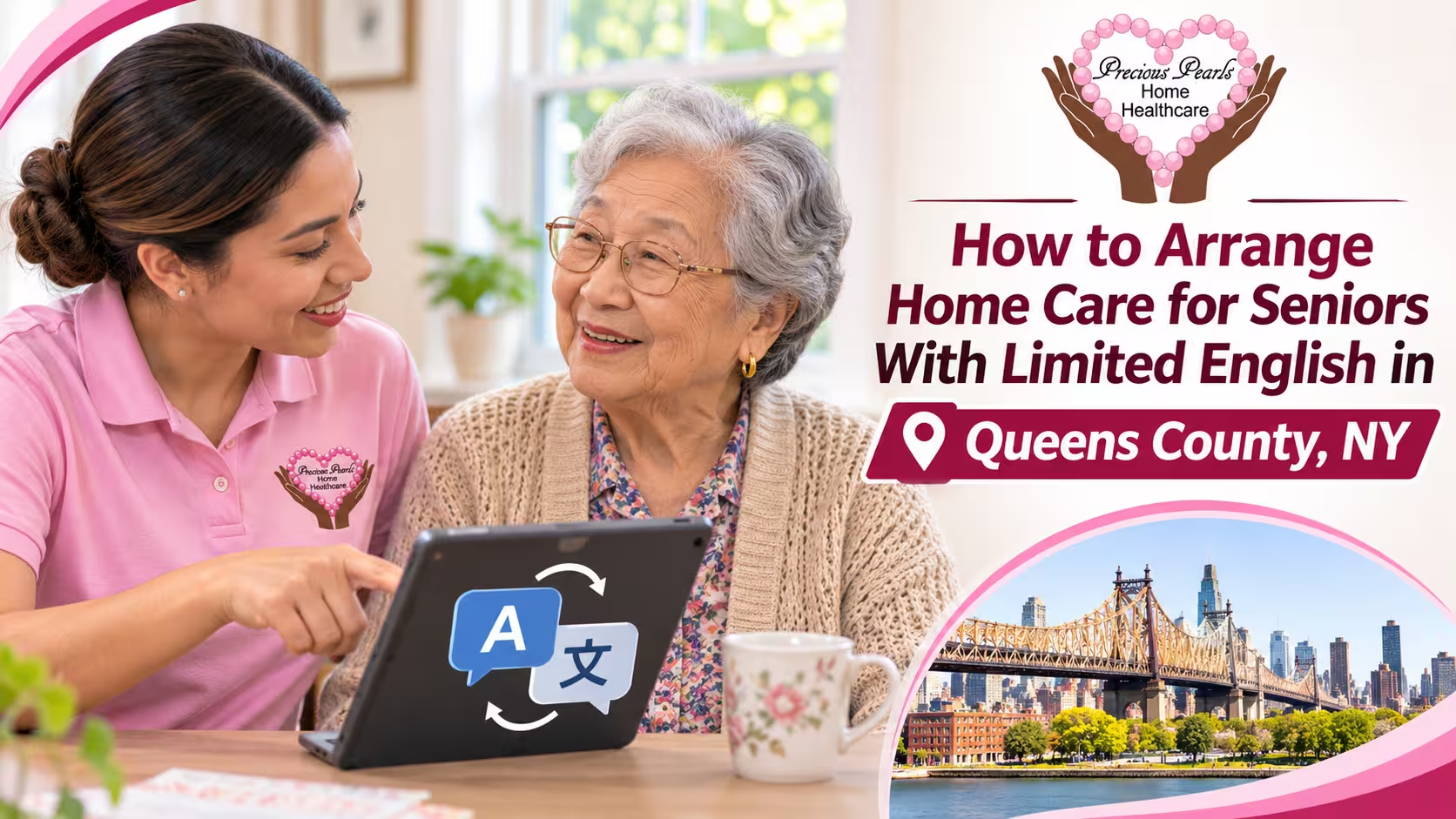
Imagine an older adult in Queens who needs help getting dressed, preparing meals, or moving around safely. When a caregiver asks a question in English, the senior struggles to explain what they need. They may simply nod, even when they have not fully understood.
This is why language compatibility matters when arranging home care. The 2020–2024 American Community Survey reports that 55.4% of Queens County residents age five and older speak a language other than English at home. Families should discuss each senior’s preferred language and communication needs before arranging care.
Identify the Senior’s Communication Needs
Start by speaking directly with the older adult. Someone may understand everyday English but prefer another language when discussing pain, personal care, or an unexpected problem. Ask which language feels most comfortable and whether a particular dialect, accent, or familiar expression matters.
Prepare this language profile before contacting agencies:
- Preferred spoken language and dialect.
- Whether the senior understands simple English.
- Whether they read their preferred language or communicate more easily by speaking.
- Hearing, vision, memory, or speech difficulties that affect communication.
- Familiar words used to describe pain, meals, mobility, and personal care.
Questions to Ask Before Accepting a Caregiver Match
Do not rely on a general statement that an agency serves a multilingual community. Language availability may depend on staffing and shift times. Ask about the actual schedule and what happens if the regular aide is sick, on leave, or replaced.
| Ask the agency | What to confirm |
| Is a caregiver available in the preferred language? | Days and hours available |
| How is language ability confirmed? | Ability to discuss everyday care needs |
| Can the senior meet the caregiver first? | Comfort communicating together |
| What happens if the caregiver is absent? | Backup and language arrangements |
| Who receives updates? | Main family contact and urgent-call process |
| Is interpretation available? | Support for complex discussions |
Make Everyday Personal Care Easier to Understand
Language compatibility matters during bathing, dressing, toileting, walking, and meal preparation. Seniors should understand what the caregiver is doing, ask for privacy, and explain pain or discomfort. Unclear instructions may cause anxiety or make an older adult reluctant to accept help.
A practical example: A senior feels dizzy when standing but knows only the familiar phrase used in their first language. If the caregiver does not understand, the concern may go unreported. Families should explain common expressions and agree on a clear way to request help.
Respect Cultural Preferences Without Making Assumptions
Speaking the same language does not mean two people share the same customs, food preferences, or personal boundaries. Ask the senior what matters instead of expecting a caregiver to know based on language or background.
| Discuss with the senior | Do not assume |
| Preferred meals and food restrictions | Everyone from one culture eats the same foods |
| Privacy during personal care | The senior is comfortable with every caregiver |
| Religious routines or observances | Everyone follows the same practices |
| Preferred name and form of address | A family member’s preference applies to the senior |
| Daily schedule and household routines | The family’s routine is automatically the senior’s choice |
Plan for Interpretation and Clear Care Instructions
A caregiver who speaks two languages and a trained medical interpreter serve different purposes. A caregiver helps with everyday communication, while an interpreter supports complex or sensitive discussions. Ask who arranges interpretation, whether it is remote or in person, and whether costs or scheduling limits apply.
Confirm these arrangements before care starts:
- Who explains assessments and care-plan changes?
- How will the senior understand important instructions?
- Are translated written materials available?
- Who should the family contact if something is misunderstood?
New York requires general hospitals to provide qualified language assistance to patients with limited English proficiency. This does not guarantee that a private home care agency has caregivers in every language. Confirm the agency’s actual caregiver availability and interpretation arrangements.
Keep Family Communication Organized
Family members may explain routines, attend planning discussions, and receive updates. However, the senior should remain part of conversations whenever possible. Ask how they want relatives involved, especially when discussing personal care, routine changes, or concerns about a caregiver.
Agree on a simple communication plan:
- Select one family representative to serve as the main point of contact for routine updates.
- Choose a backup contact.
- Decide which changes require an immediate call.
- Confirm how schedule changes and replacement caregivers will be communicated.
- Ask how the senior can raise a concern privately.
Relatives may help with everyday conversations when the senior agrees, but children or untrained family members should not interpret complex health information.
Review the Care Plan Before the First Visit
The care plan should record the preferred language, communication difficulties, daily routines, personal-care preferences, authorized tasks, and process for reporting changes. Ask the agency to explain the plan in a way the senior and family understand, and confirm who updates it when needs change.
New York State outlines home health aide duties within the authorized plan of care and applicable supervision requirements. Do not assume an aide provides skilled nursing, makes medical decisions, or automatically serves as an interpreter. Families discussing arrangements with Precious Pearls Home Health Care should confirm caregiver availability and interpretation options directly.
Frequently Asked Questions
How can I find a caregiver who speaks my parent’s language in Queens?
Tell agencies the senior’s preferred language and dialect, then ask whether a caregiver is available for the required days and hours. Confirm how the agency handles absences and replacement shifts so communication remains consistent.
Does every home care agency in Queens offer multilingual caregivers?
No. Language availability varies by agency, staffing, and schedule. Ask about the specific language needed and request confirmation before services begin. A general statement about serving diverse communities does not guarantee a suitable match.
What if the caregiver and senior do not speak the same language?
Ask how routine communication, care instructions, and urgent concerns will be handled. Interpretation support, clear written instructions, and an agreed family contact may help. Caregivers should not guess when they do not understand a request.
Should family members interpret during home care visits?
Relatives may help with everyday conversations if the senior agrees. For complex health information, assessments, or sensitive discussions, ask about qualified interpretation so important details are communicated accurately.
Why should language preferences be included in the care plan?
Recording language and communication needs helps caregivers follow familiar routines and understand how the senior expresses discomfort or asks for assistance. It also helps the agency prepare for substitute caregivers and maintain consistent family updates.
Final Thoughts: Make Communication Part of the Care Arrangement
Seniors should be able to explain their needs, understand the help they receive, and take part in decisions about daily routines. Queens families can support this by confirming language availability, planning interpretation, recording personal preferences, and agreeing on clear updates. Ask Precious Pearls Home Health Care about these arrangements before scheduling services.