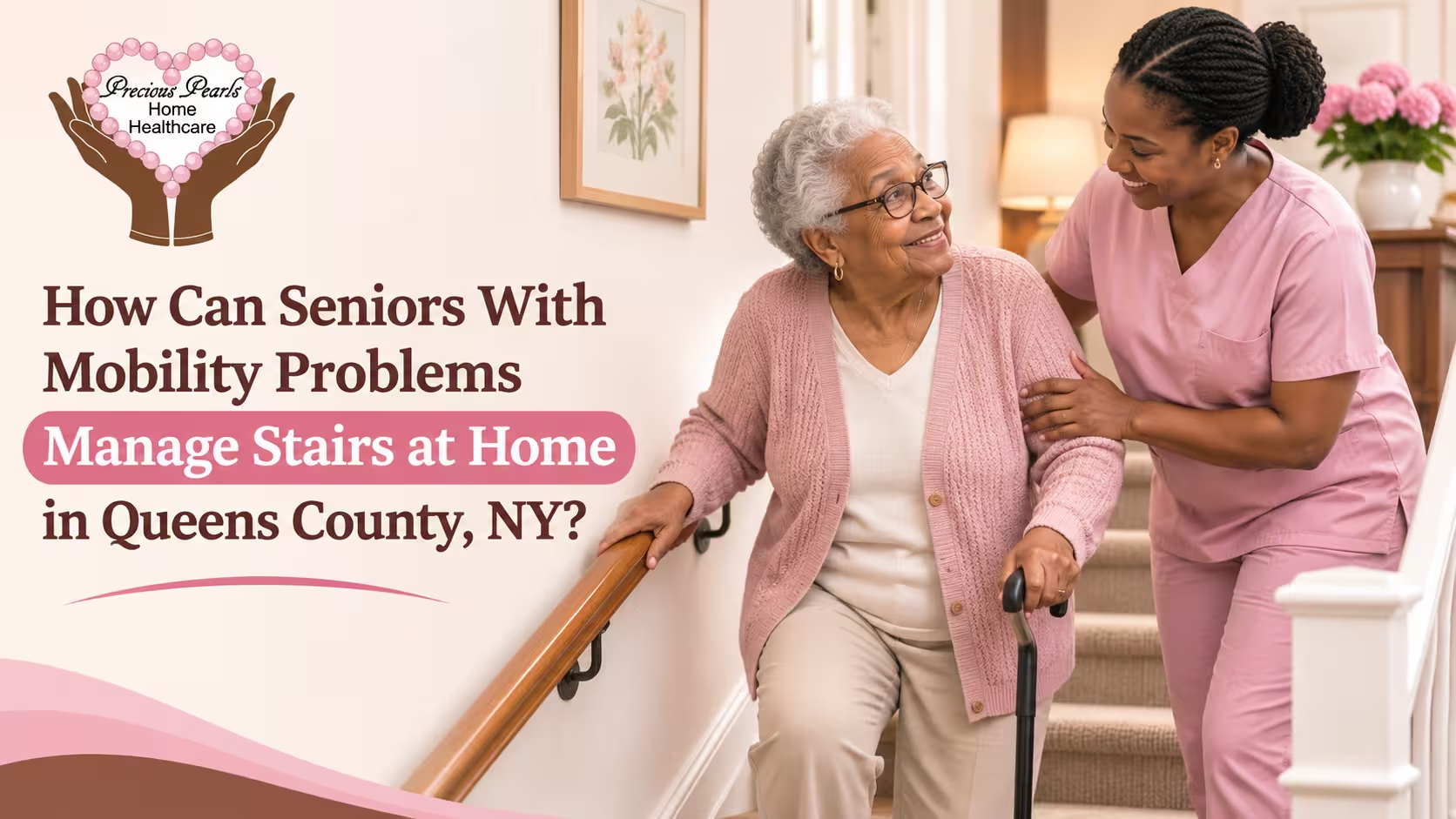
Stairs can become one of the hardest parts of living at home as an older adult. A senior who once climbed them without thinking may begin holding the wall, pausing halfway, or avoiding trips between floors. These changes can affect daily routines, access to bedrooms and bathrooms, and the ability to leave home safely.
For Queens families, the goal is to understand what has changed, reduce the risks, and decide whether the staircase can be made safer or the home layout needs to change.
Signs That Stair Use Is Becoming Unsafe
Difficulty with stairs may develop gradually. Watch for changes in movement or behavior, even if the senior has not mentioned fear.
Common warning signs include:
- Pulling heavily on a railing or wall to climb.
- Taking each step slowly, sideways, or one stair at a time.
- Stopping to catch their breath or rest during a short flight.
- Hesitating, freezing, or appearing afraid before stepping down.
- Missing steps, stumbling, or having near-falls.
- Avoiding upstairs rooms, carrying laundry, or leaving the home.
These signs may reflect pain, reduced balance, lower-body weakness, vision changes, or another health concern. Sudden changes, dizziness, or repeated falls warrant prompt medical attention.
Check the Staircase for Hazards
Review the stairs the senior uses. A steep staircase, clutter, loose carpeting, or poor lighting can increase danger.
| Stairway feature | What to check |
| Lighting | Bright, even light from top to bottom; switches reachable at both ends |
| Handrails | Secure rails that can be grasped continuously, ideally on both sides where feasible |
| Steps | No loose carpet, damaged edges, uneven surfaces, or objects left on stairs |
| Contrast | Clear visibility of step edges without confusing patterns or glare |
| Space | Clear landings and no cords, shoes, or storage items in the stair path |
Do not have a senior carry laundry or bags on stairs. Repair loose rails or damaged steps before routine use.
Discuss Mobility Limits With the Right Professional
A physician can assess new symptoms. A physical therapist may evaluate strength, balance, and stair technique, while an occupational therapist can review home setup and recommend adaptations.
An assessment can determine whether a mobility aid or stair training is suitable, whether a stair lift fits the person and staircase, or whether stair use is no longer safe.
Do not improvise a technique for physically lifting or carrying a senior on the stairs. That can injure both people or lead to a fall. If the person cannot manage the steps independently, arrange professional guidance and an appropriate transfer or accessibility solution.
Consider a Bedroom or Bathroom on the Main Floor
If stairs lead mainly to a bedroom or bathroom, consider moving a bed downstairs or arranging access to essential facilities on the main floor.
Queens homes may have limited space, so ensure the new setup allows safe walking, transfers, mobility aids, privacy, and a clear exit route. When a senior no longer safely reaches the upper floor, limiting stair trips is not a failure. It may be a reasonable short-term step while the family considers longer-term options.
Stair Lifts and Other Accessibility Modifications
A professional may recommend a stair lift, added handrails, improved lighting, step repairs, or another modification. A stair lift requires suitable space and safe transfers, so it is not right for every staircase or user.
Queens residents may also be able to explore home modification assistance. NYC Aging’s Older Adult Home Modification Program offers eligible older adults an occupational-therapist assessment and no-cost modifications. The program’s application information lists eligibility conditions, including age 62 or older, NYC residency, income requirements, and plans to remain in the home. Families should confirm current eligibility and available work before making plans.
Renters should seek landlord approval for permanent modifications. Disability-related tenant protections may apply, depending on the request and circumstances.
When Moving or Changing the Living Arrangement May Be Safer
Sometimes the staircase cannot be made safe enough, or the senior’s mobility changes beyond what modifications can address. If the person cannot reliably enter or exit the home, reach essential rooms, or use stairs without substantial risk, the family should consider alternatives.
Options may include:
- Living on one floor with essential facilities.
- Moving to an accessible apartment or ground-floor unit.
- Choosing a home with elevator access or fewer barriers.
- Discussing additional home care support after a professional assessment.
Include the senior and healthcare team in decisions where possible, while considering preferences, emergency access, and the ability to exit safely.
Frequently Asked Questions
Should seniors keep using stairs to maintain strength?
Not automatically. Stair exercise should only be considered if a healthcare professional confirms that it is safe and provides guidance suited to the senior’s abilities. Unsafe stair use can cause serious injury.
Can a home aide carry an older adult up or down stairs?
An untrained caregiver or aide should not attempt to carry a senior on stairs. Families should seek professional assessment and use appropriate equipment, transfer support, or an accessibility plan.
Will Medicaid or a local program pay for a stair lift?
Coverage depends on the program, eligibility, medical need, and the equipment or modification requested. Families should ask the senior’s Medicaid plan or a local home-modification program directly and confirm approval before arranging installation.
What if a senior lives in a walk-up apartment in Queens?
A walk-up can create a serious access issue when mobility declines. Families should ask about safer housing options, accessibility modifications, and professional support. If the senior cannot safely manage the stairs, avoid routine stair use until a safer plan is established.
Where can families get help assessing stair safety?
A healthcare provider, physical therapist, or occupational therapist can assess mobility and recommend next steps. NYC Aging also offers home-modification resources for eligible older adults.
Final Thoughts: Making Stair Use Safer for Queens Seniors
Stair difficulty can change how an older adult uses their home, reaches essential rooms, and stays connected with the outside world. Early attention to warning signs, repairs, lighting, railings, and professional mobility assessments can help families make decisions before a serious fall occurs.
Precious Pearls Home Health Care supports older adults and families with home care needs, helping them consider daily assistance and safety concerns as mobility changes. When stairs become a barrier, the priority is a realistic plan that protects the senior’s safety, dignity, and independence.