When an older parent refuses help with bathing, families may worry about personal hygiene, health, and safety. Repeated reminders or arguments, however, can make the situation more stressful. Resistance often has a reason behind it, such as embarrassment, fear of falling, physical discomfort, or frustration about losing independence.
The first step is to understand what makes bathing difficult rather than treating refusal as stubborn behavior. A calmer approach, a few bathroom adjustments, and more control over the routine can make personal care feel manageable. Families in Nassau County can also consider appropriate in-home support when bathing becomes difficult to manage safely.
Why Might an Older Adult Refuse Help With Bathing?
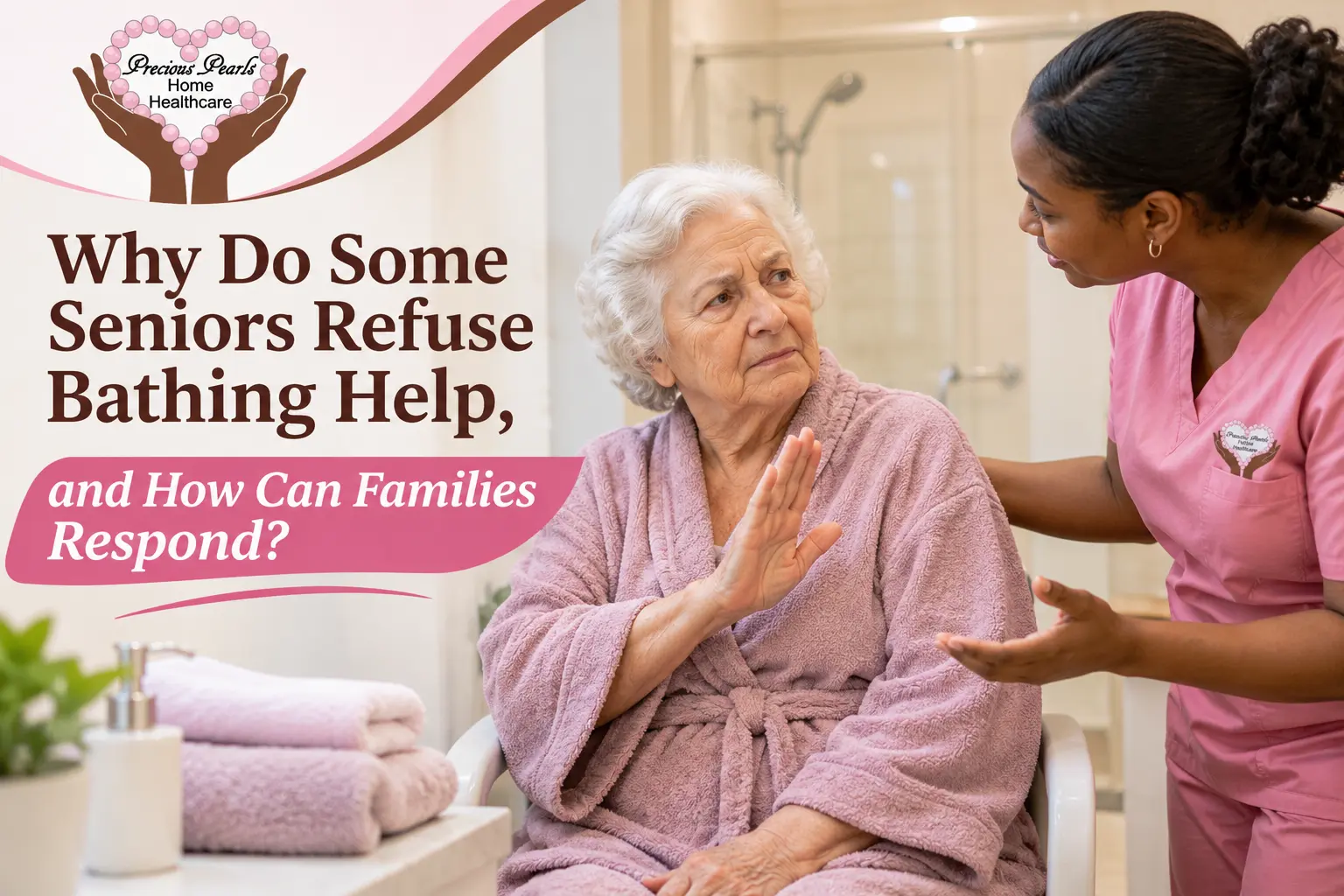
Bathing is a private activity that requires someone to enter a vulnerable situation. An older adult who once managed personal care independently may feel uncomfortable having a family member or caregiver assist with undressing, washing, or bathroom transfers.
Several concerns can contribute to refusal:
- Embarrassment: The senior may feel exposed or uncomfortable receiving intimate personal care from an adult child or unfamiliar caregiver.
- Fear of falling: Wet floors, slippery tubs, and difficulty standing can make showers feel dangerous.
- Pain or fatigue: Arthritis, joint stiffness, muscle weakness, or shortness of breath can make stepping into a tub and standing for several minutes difficult.
- Loss of independence: Accepting help may feel like admitting that everyday abilities are changing.
- Sensory discomfort: Water pressure, temperature, bathroom noise, or strong soap scents may cause irritation.
- Routine changes: A different caregiver, unfamiliar bathroom setup, or rushed schedule may create resistance.
A sudden change in bathing habits deserves attention. Pain, dizziness, skin irritation, or a new mobility problem may need assessment by a healthcare professional.
How Can Families Make Bathing Feel Less Embarrassing?
Privacy and control can make a significant difference. Instead of announcing that it is time for a bath, ask whether the senior would prefer assistance now or later. Give simple choices about the caregiver, water temperature, clothing, and whether they prefer a shower or another bathing method.
Try these communication techniques:
- Ask permission before entering the bathroom or touching personal belongings.
- Explain each step before providing physical assistance.
- Let the senior wash the areas they can comfortably reach.
- Use a towel or bath blanket to cover areas that are not being washed.
- Speak calmly and avoid correcting, criticizing, or threatening.
- Stop if the person becomes distressed and try again later.
Families should also consider whether a different caregiver would feel more comfortable for the senior. Some older adults find personal hygiene assistance easier when it comes from a trained professional rather than a close relative.
What Bathroom Changes Can Make Bathing Safer?
Fear of slipping is a common reason older adults avoid showers. A safer bathroom arrangement can reduce that concern, especially when standing, turning, or stepping over a tub edge is difficult.
Consider these practical adjustments:
| Bathroom adjustment | How it helps |
| Secure grab bars | Provide stable support during transfers |
| Shower chair or bench | Allows bathing while seated |
| Handheld showerhead | Makes washing easier without frequent movement |
| Non-slip bathroom surfaces | Helps reduce slipping risks |
| Better lighting | Makes edges and obstacles easier to see |
| Warm towels and comfortable room temperature | Reduces discomfort before and after bathing |
Grab bars should be properly installed and anchored to suitable wall supports. Towel racks are not designed to hold body weight. If the senior has difficulty transferring into the tub or standing safely, an occupational therapist can assess the bathroom and recommend suitable equipment.
Does a Senior Need a Full Shower Every Time?
No. A full shower is not the only way to maintain personal hygiene. If bathing causes anxiety, pain, or exhaustion, a shorter and more manageable routine may be a better starting point.
A sponge bath or partial wash can help clean areas that need regular attention, including the face, underarms, skin folds, and private areas. Families can also separate bathing into smaller tasks rather than trying to complete everything at once.
The routine should reflect the person’s comfort, skin condition, activity level, and healthcare needs. There is no need to turn every refusal into a confrontation. However, persistent hygiene difficulties, skin problems, or signs of infection should be discussed with a healthcare provider.
When Should Families Consider Professional Bathing Assistance?
If a senior repeatedly refuses help, becomes distressed during transfers, or needs more physical support than family members can safely provide, professional assessment may be appropriate. A healthcare provider can investigate pain, balance problems, medication effects, or other concerns contributing to resistance.
New York State recognizes personal care services that include assistance with personal hygiene. These services are provided by certified Personal Care Aides under the required supervision and care arrangements.
Nassau County has a substantial older population. In 2024, approximately 273,100 residents, representing 19.6% of the county’s population, were age 65 or older. Families looking into senior bathing assistance in Nassau County should consider whether an in-home care plan can address personal hygiene, mobility, and safety needs together.
Precious Pearls Home Health Care can be a resource for families exploring in-home personal care support. The right arrangement should respect the senior’s preferences, abilities, and consent rather than forcing a bathing routine.
Frequently Asked Questions
Why does my elderly parent refuse to shower even when they need help?
Refusal may come from embarrassment, fear of falling, pain, fatigue, or discomfort with receiving personal care. Ask what concerns them and look for changes in mobility or health. Avoid assuming that the behavior is simply stubbornness.
How often should seniors bathe?
There is no single schedule that works for every older adult. Bathing frequency depends on activity, skin condition, personal preference, and medical needs. A healthcare provider can recommend an appropriate routine when skin problems or other health concerns are present.
What if my parent becomes angry when I offer bathing assistance?
Do not argue or force the situation. Give the person space, acknowledge their discomfort, and offer another time or a different way to wash. If resistance continues, consider whether pain, fear, or the caregiver relationship is contributing.
Can seniors receive bathing assistance at home?
Yes. Depending on eligibility and the care arrangement, personal care services may include help with bathing, dressing, and other hygiene activities. Families should confirm the provider’s qualifications, supervision arrangements, and the services included in the care plan.
What should families do if bathing becomes unsafe?
Pause the usual routine if the senior cannot enter, exit, or stand safely. Ask a healthcare professional about mobility concerns and whether an occupational therapy assessment or bathroom equipment could help. Do not attempt transfers that exceed the caregiver’s abilities.
Final Thoughts: Making Bathing More Comfortable for Seniors
A senior’s refusal to bathe often signals discomfort, fear, or a need for greater control over personal care. Families can make progress by listening, offering choices, improving bathroom safety, and respecting consent. When daily hygiene becomes difficult to manage, Precious Pearls Home Health Care can help families explore appropriate in-home support that protects comfort and independence.