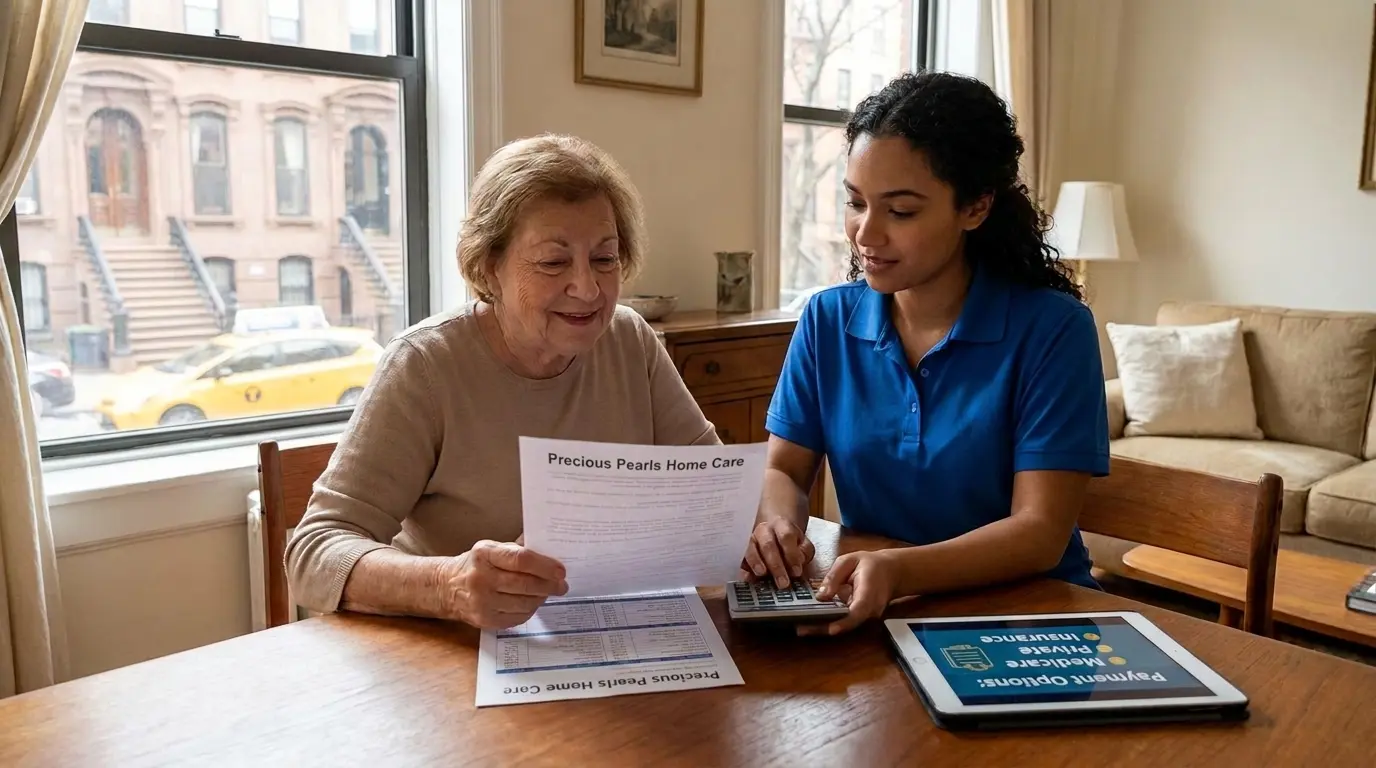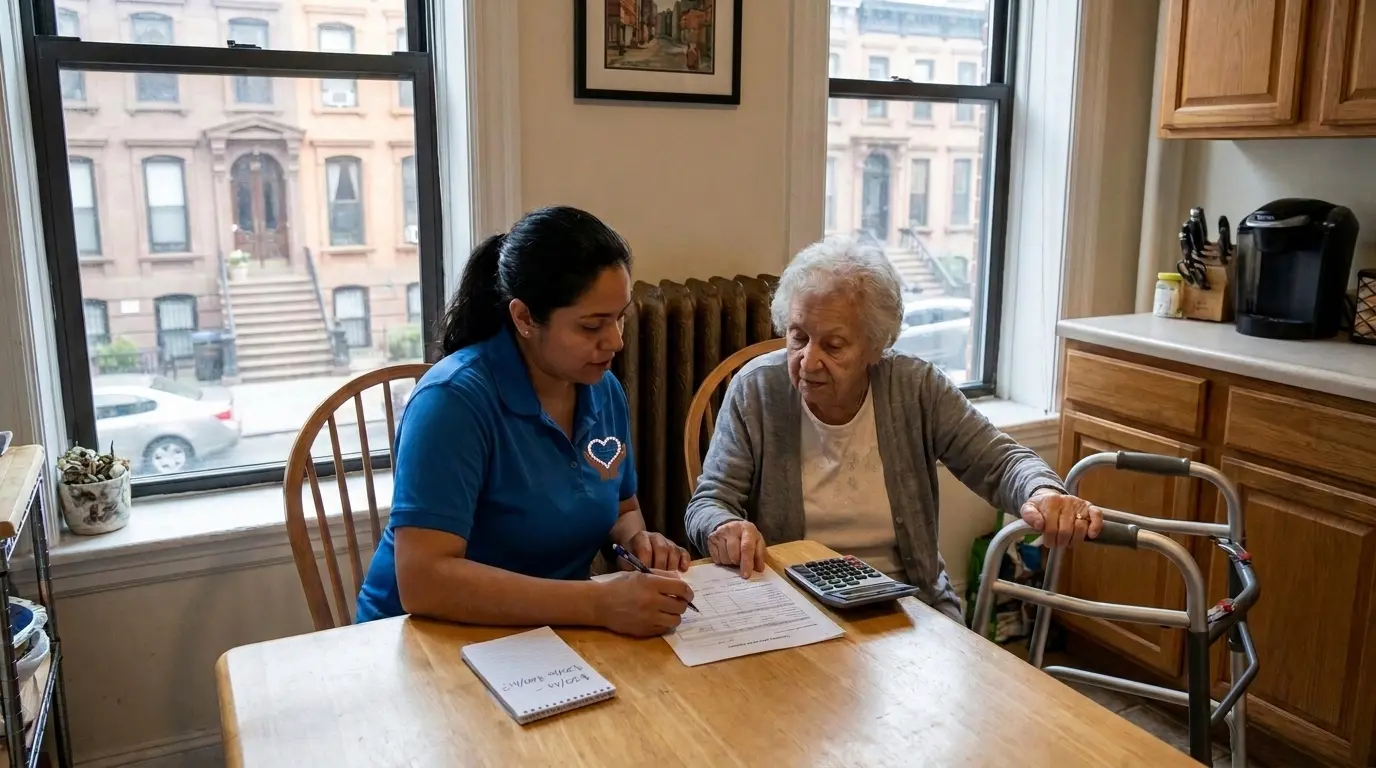
When checking out residential aged care options, the hourly charge is typically the first price you’ll be interested in. The hourly home care cost New York families encounter depends on the type of assistance, caregiver qualifications, schedule, and provider.
The latest CareScout Cost of Care Survey gives families a reliable starting point. In 2025, it estimated the median non-medical caregiver wage for New York was estimated at $35 per hour, which was published in 2026. Private duty nursing costs $120 an hour.
What Is the Average Hourly Home Care Rate in New York?
The most recent statewide median reported by New York for any non-medical home care is $35 per hour. The figure for CareScout’s non-medical caregiver category includes both homemaker and home health aide services because the prices for these services have become comparable.
That provides a helpful reference for families to look at when comparing quotes, but it is not a set rate throughout the state. Fees will vary according to the type of care plan needed, the schedule, the location, and the level of qualifications of personnel.
At the $35 median, the basic cost can look like this:
| Weekly care | Estimated weekly cost | Estimated monthly cost* |
| 10 hours | $350 | $1,517 |
| 20 hours | $700 | $3,033 |
| 30 hours | $1,050 | $4,550 |
| 40 hours | $1,400 | $6,067 |
Estimates were made with 4.33 weeks/month and the median rate of $35 in New York. Actual agency bill rates may vary. This calculation can be helpful when planning budgets, as families can see the impact on the total number of hours when personal care hours increase. For a broader discussion of total home care costs in New York, these figures can be considered alongside monthly and annual planning estimates.
Why Do Caregiver Hourly Rates Vary?
The quoted hourly rate is just one of the elements. The quote for two families in the same area may differ due to the differences in their needs and schedules.
Type of Assistance
Typical companion care services are socializing, cooking, light cleaning, errands, and providing oversight. Personal care can include bathing, dressing, grooming, walking, and/or other activities of daily living. More demanding care can require a caregiver with specialized training or experience. That can increase the caregiver’s hourly rates that a family encounters.
Caregiver Qualifications
A basic caregiver job description is not the same as a specialized one. An example of this is a client who requires extensive mobility assistance and may need someone who is very trained and experienced. Rather than the price, families should request the qualifications that are part of the quoted price.
Number of Hours
How much care is required per week will have a significant impact on overall expenditure. However, more hours do not automatically mean a lower hourly rate. A minimum number of shifts is required for some home care agencies. The number of hours needed per visit may vary between providers, and this might determine overall expenses for families where assistance is only required for a small amount of time.
Do Weekday and Weekend Rates Differ?
No rule requires that each home care agency charge a different rate for the weekend. Providers can structure their hourly billing differently, so families need to ask whether evenings, weekends, holidays, or overnight care carry additional charges. For example, two providers might both advertise a $35 weekday rate. One may maintain the price throughout the week, while another may apply a higher rate for Saturday or Sunday care.
Before signing an agreement, ask for the complete schedule of rates. Confirm the cost for:
- Weekday daytime care
- Evenings and overnight hours
- Saturdays and Sundays
- Holidays
- Short visits or minimum shifts
This prevents an unexpectedly higher bill when the caregiver schedule changes.
What Is the Difference Between Non-Skilled and Skilled Care?
The distinction matters because the hourly prices can be dramatically different.
Non-Skilled Home Care
Non-medical caregivers help with the activities of daily living, but don’t render medical care. Typical services might consist of:
- Bathing and dressing assistance
- Meal preparation
- Companionship
- Light housekeeping
- Mobility support
- Help with daily routines
The new median for this category in New York is $35. It is the most helpful indicator of what families in need of regular home care for seniors can anticipate.
Skilled Nursing
Skill-based nursing is provided by a trained clinical professional and health services that extend beyond the basic day-to-day care. This means its price is much higher.
Private-duty nursing rates in New York have a median of $120 per hour, according to CareScout. The survey also reports using a private-duty nursing home at a median rate of $150 per visit, so it’s important to families that they understand how a provider charges for a visit by the hour or by the visit.
It is important to consider a $35 caregiver rate against the $120 nursing rate, not as being the same service. Qualifications, responsibilities, and nature of care vary.
What Does a Home Aide Actually Cost?
It is important for families to know the difference between the wage that an aide is paid and what a home care agency charges its client.
The New York City, Long Island, and Westchester County minimum wage requirements for home care aides are scheduled to rise to $19.65 an hour in 2026, according to the Department of Labor. This is not a consumer billing rate; it is a minimum requirement for compensation for eligible workers.
An agency can have a much higher client ratio, as there may be expenses such as payroll expenses, insurance, scheduling, supervision, administration, caregiver recruitment, and more. For families in Nassau or Suffolk County, there is another consideration. New York’s wage-parity rules specify a current $3.22 per hour supplemental benefit portion for covered Medicaid-reimbursed home care aide work in Nassau, Suffolk, and Westchester counties.
How Can You Estimate Your Hourly Senior Care Cost?
Start with the care schedule rather than the provider’s advertised monthly package. Suppose a family needs 25 hours of non-medical care each week. Using the New York median of $35 per hour:
25 hours × $35 = $875 per week
That equals roughly $3,789 per month using 4.33 weeks. The actual bill may differ if the provider has minimum shifts, weekend pricing, or a different local rate. This method also makes it easier to adjust the schedule. If a family reduces care from 25 to 15 hours per week after a relative’s needs change, the expected hourly expense can be recalculated immediately.
What Should You Ask Before Accepting a Home Care Rate?
Just because you see a low advertised rate doesn’t mean it’s actually the cheapest once you factor in extra fees. Ask the agency to give you their billing structure in writing so everything’s clear from the start.
Useful questions include:
- What is the standard hourly rate?
- Does the rate change on weekends or holidays?
- Are clients required to book a minimum shift length?
- Are overnight hours billed differently?
- Does specialized care have a separate rate?
- Is there an additional charge for short-notice scheduling?
- What happens if the regular caregiver is unavailable?
Precious Pearls Home Health Care is one provider families can include when comparing hourly rates, schedules, and exactly what each care plan covers. The goal is not simply to find the lowest number, but to understand what that number actually includes.
Final Thoughts: Understand the Hourly Rate Before Choosing Care
The latest benchmark for hourly home care cost New York families can use for planning is $35 per hour for non-medical caregiver care, while private-duty nursing has a $120 median hourly rate. Weekend schedules, specialized needs, minimum shifts, and provider billing policies can change the final number.
For families comparing care options, Precious Pearls Home Health Care can be evaluated alongside other providers by asking for a clear hourly rate, a complete schedule of charges, and an explanation of what the care plan includes. A transparent comparison makes it much easier to build a realistic caregiver schedule and budget.
Frequently Asked Questions
How much is home care per hour in New York?
According to the latest CareScout data, the median rate for non-medical caregiver services in New York is $35 an hour. That number comes from a 2025 statewide survey published in 2026. Actual rates depend on location, care needs, who’s providing care, scheduling, and the agency’s billing policies.
Is weekend home care more expensive?
It can be, but there is no single statewide weekend rate that every provider must charge. Some agencies stick to the same hourly rate all week; others have different prices for weekends, holidays, evenings, or overnight. Always ask for the provider’s full rate schedule before setting your budget.
How much does skilled nursing cost per hour in New York?
The latest survey by CareScout indicates the average hourly rate for private-duty nurse services across New York is set at $120. Skilled nursing requires higher fees because it includes certified medical care, more than simply assistance with everyday tasks. What you pay depends on the specific service, schedule, professional qualifications, and which provider you use.
Is a private caregiver cheaper than a home care agency?
A private caregiver may have a lower direct hourly rate, but the comparison is not always equal. Families hiring directly may take on responsibilities related to payroll, taxes, scheduling, screening, and finding replacement care. An agency rate may include administrative and support services that are not reflected in a private caregiver’s advertised wage.