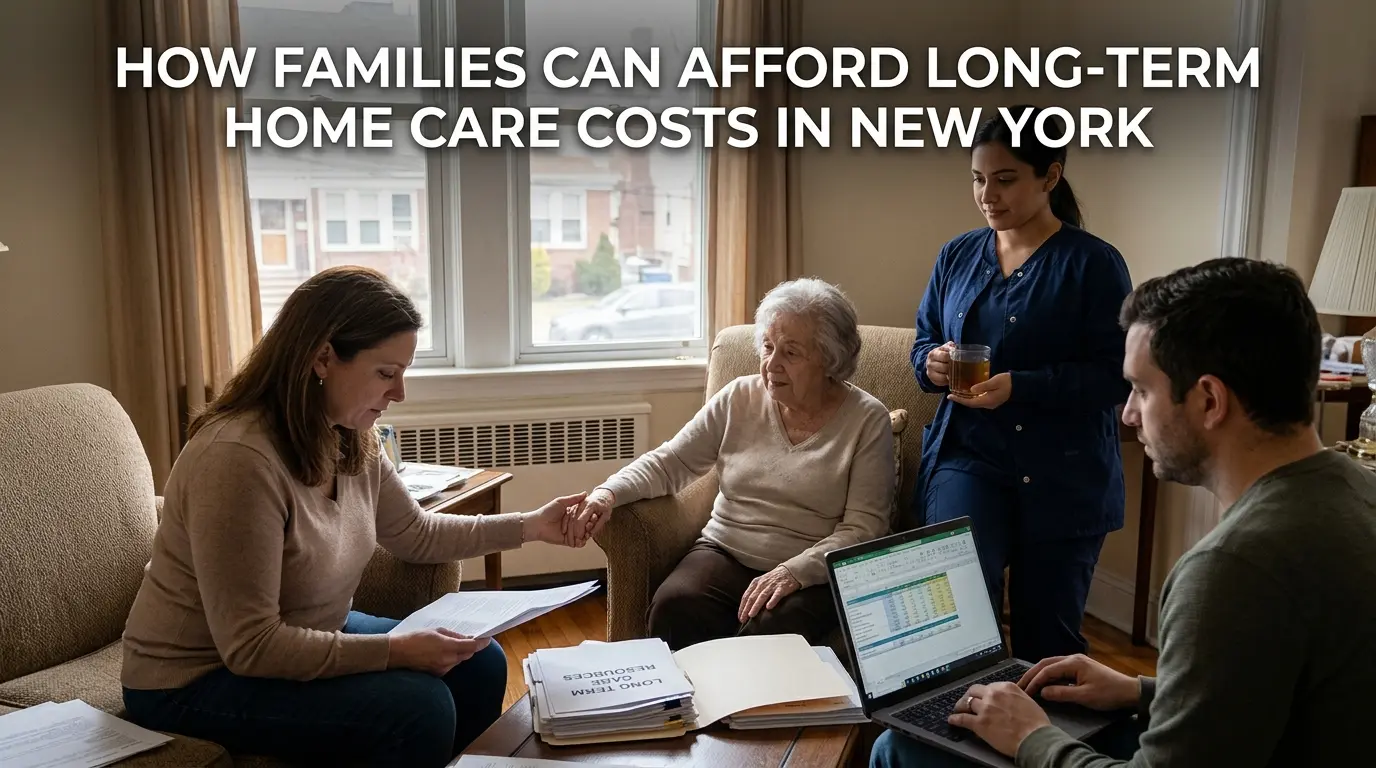
The long-term home care cost can be significant for a senior parent who requires assistance with tasks like bathing, dressing, eating, getting around, reminding them to take their medicines, and more. For many New York families, the challenge is not only finding dependable care but also building a plan that can continue as needs change.
Fortunately, there are times when families don’t have to depend on one source of income. All of these may be involved, from private savings to long-term care insurance, Medicaid programs, veterans’ benefits, and a well-planned care schedule. Understanding the available options can make home care financial planning more manageable.
Start With the Real Cost of Care
First, find out the number of hours required before deciding on the way to pay for care. A few hours of assistance each week creates a very different care budget from daily or around-the-clock support.
Current local pricing can be helpful to get a general idea. Care.com reports an average posted home care rate of about $26.50 per hour in Bellmore, NY, as of September 2026. That figure is based on listed provider rates, so actual agency pricing can vary by services, schedule, caregiver qualifications, and care needs.
For perspective, 20 hours per week at $26.50 would equal about $2,296 per month before any additional charges. Forty hours per week would be about $4,593 per month. These are simple planning examples, not guaranteed agency prices.
North Bellmore, NY families can use the local rates as a baseline and ask for a custom rate quote before creating a long-term budget.
Build a Care Budget Around the Family’s Needs
The hourly wage of a caregiver shouldn’t be the only expense listed on a practical budget. Consider:
- Number of care hours needed each week
- Personal care and daily living assistance
- Transportation or errands
- Specialized dementia or mobility support
- Weekend or holiday scheduling
- Possible increases in care hours
- Home modifications or safety equipment
- Supplies and other out-of-pocket expenses
This is where retirement planning and family finances are important. Instead of estimating one large lifetime cost, families can create several scenarios.
For example, calculate the monthly budget for 15, 25, and 40 hours of care. Then consider what happens if the older adult eventually needs more assistance. This gives the family a clearer picture of how much savings may be needed and when outside financial resources could become important.
Know Which Programs Can Help Pay
Medicaid Home Care
Qualifying persons are eligible to receive some services at home and in their community through New York Medicaid. Housekeeping, meals, bathing, toileting, and grooming may be provided within the state Personal Care Services program. In addition, New York has the Consumer Directed Personal Assistance Program (CDPAP), which gives eligible Medicaid members the option to select and hire their own personal caregiver.
Eligibility is based on financial and care needs. The latest published Medicaid chart for disabled persons, blind persons, and persons age 65 and older in New York shows that they can earn up to $1,800 per month and have a resource limit of $32,396. Verify eligibility as current because income and resource eligibility requirements may change.
New York also changed minimum-need requirements for certain Medicaid personal care and long-term care programs beginning September 1, 2025.
NHTD Waiver
The Nursing Home Transition and Diversion (NHTD) Medicaid Waiver is a program that provides services to eligible adults (seniors and those with physical disabilities) living in the community instead of in a nursing home. Applicants are required to be eligible for community-based Medicaid and for a level of care at a nursing home.
There is an important current limitation: New York reported in May 2026 that the NHTD waiver had reached its approved participant maximum, so new referrals were temporarily not being processed. Availability can change, making it important to check the current status before relying on this program in a financial plan.
Do Not Assume Medicare Pays for Long-Term Care
Families frequently have misconceptions about Medicare at the start of paying for elderly care.
Medicare will pay for some types of medically related home health care, but not services that are predominantly custodial care, such as help with bathing, dressing, eating, and other activities of daily living.
That distinction will be important in the development of a care budget. A family may have Medicare coverage while still needing another payment source for regular non-medical home care.
Look Beyond Savings and Retirement Income
While private payment is often used, there are a number of other resources to consider before putting retirement assets to immediate use.
Long-term care insurance may cover the costs of a qualifying care, as outlined in the policy. A state tax credit of 20% of eligible long-term care insurance premiums (up to $1,500 for individuals and $3,000 for married couples filing a joint return) is also available to New York residents. The New York Department of Taxation and Finance states that individual taxpayers generally must have New York adjusted gross income below $250,000 to claim the credit.
Other possibilities can include:
- Veterans benefits for eligible veterans or surviving spouses
- Life insurance policy options, depending on policy terms
- Home equity strategies
- Personal savings and retirement income
- Family contributions
- Long-term care insurance benefits
There are various tax, eligibility, and financial implications for each option. Families should check the actual policy or program rules and should not presume that a benefit will provide for a specific service.
Reduce Costs Without Cutting Necessary Care
Having a good plan doesn’t necessarily mean the lowest hourly price. It means matching paid care to actual needs. Do a professional evaluation of the situation and decide what tasks need caregiver support. Family members might be able to perform some tasks or appointments, and paid caregivers can provide personal care and safety.
There’s also an impact on the overall cost when it comes to scheduling. Or, a family can choose to pay for supervision for certain hours of the day, instead of buying an exact number of hours each day.
For families hiring privately, employment responsibilities can also affect the total cost. New York’s 2026 minimum wage for home care aides is $19.65 per hour in New York City, Long Island, and Westchester County, effective January 1, 2026.
Agency care and private hiring come with different costs, responsibilities, and paperwork. Don’t just look at the advertised hourly rate; compare the whole package.
Make the Plan Before a Crisis
The best time to discuss future care costs is before a sudden hospitalization, fall, or major change in independence forces the family to make decisions quickly.
Precious Pearls Home Health Care can be part of that conversation by helping families understand the type and level of home support that may be appropriate for an older adult.
Create a written plan that includes expected monthly care expenses, available income, insurance benefits, potential Medicaid eligibility, emergency savings, and who will help manage financial and care decisions. Review the plan whenever the senior’s health or care needs change.
Frequently Asked Questions
Can Medicare pay for long-term home care in New York?
Medicare covers some skilled home health services if you meet their requirements, but it doesn’t pay for ongoing custodial long-term care. So, when planning, only count Medicare for specific medical needs, not for regular help with everyday activities.
What is the average home care rate near North Bellmore, NY?
Care.com reported an average posted home care rate of about $26.50 per hour in Bellmore, NY, in September 2026. Actual costs can differ based on the provider, schedule, services, caregiver experience, and level of care required.
Can Medicaid help pay for home care in New York?
Yes, eligible Medicaid recipients can get certain personal care and community-based long-term care services. Eligibility depends on financial, medical, and functional factors. New York has programs like PCS and CDPAP, each with their own rules and assessments.
Should families use retirement savings for home care?
Retirement savings might help pay for care, but families should look into insurance, Medicaid eligibility, veterans benefits, tax implications, and any other available resources first. A long-term care budget helps clarify how much retirement income you can responsibly put toward care.
Final Thoughts: Build a Sustainable Home Care Plan
Long-term care is easier to handle when families plan based on actual needs rather than reacting to every new expense. Start with a realistic care budget, check out your financial resources, and revisit the plan as your elderly parent’s needs evolve.
For families in North Bellmore and communities across New York, Precious Pearls Home Health Care can be one part of a broader plan focused on maintaining appropriate support while keeping family finances in view.