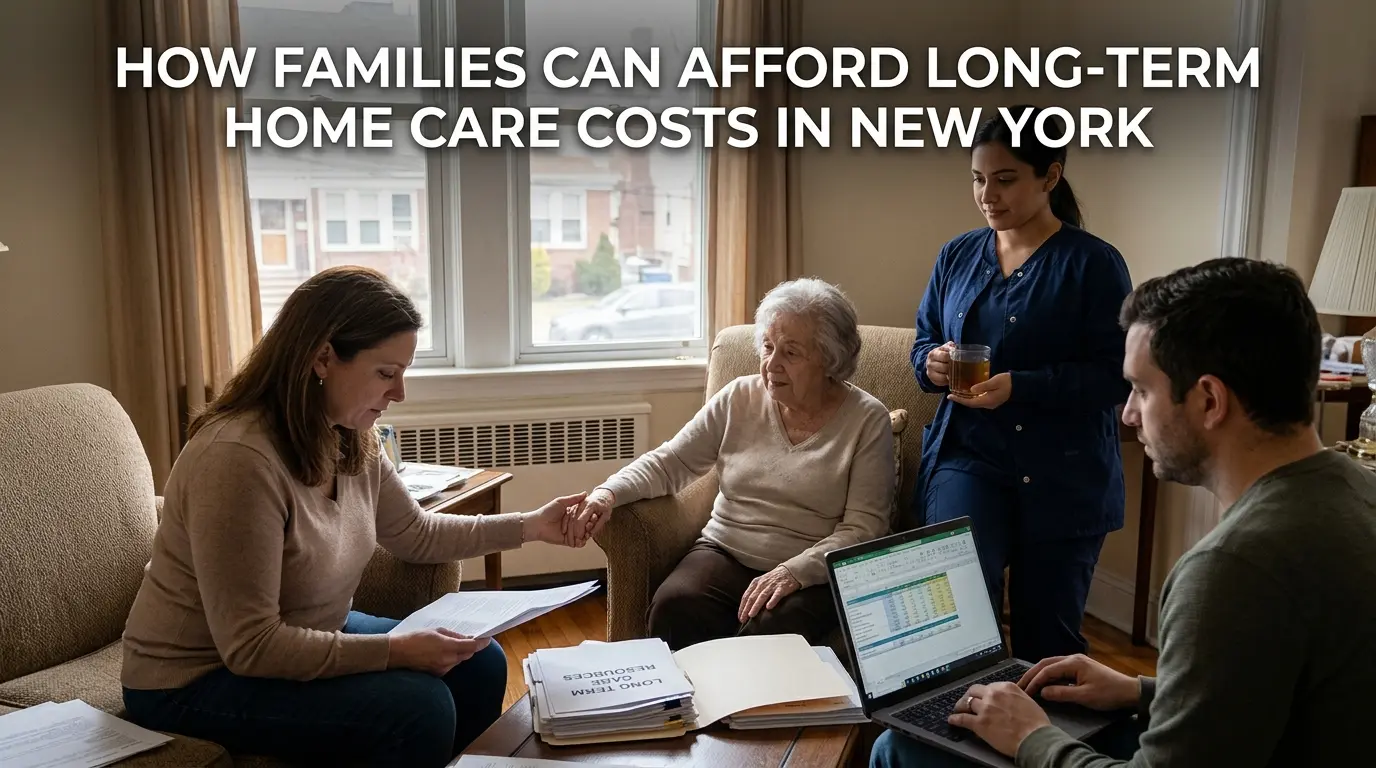
One of the largest financial commitments a New York family must make when a family member or elder requires regular care is the cost of home care. The appropriate payment option will depend upon the type of care required, eligibility, insurance benefits, and the length of services that may be needed.
Having an understanding of private pay vs insurance home care can help families compare costs, coverage limits, and payment options before they choose a home care plan.
What Is Private Pay Home Care?
Private pay is when the family or person pays for home care services themselves, instead of the insurance company. Funds can be derived from savings, retirement benefits, family contributions, or other personal funds.
This option may offer more flexibility, as families will not be restricted by the insurance company’s covered services or authorization requirements. Private payment is recognized in New York as a means of providing some home care and long-term care services.
Private pay can be helpful for people who require personal care services that are not covered by the insurance, need additional hours than the insurance plan provides, or are not eligible for Medicaid.
How Insurance-Covered Home Care Works
Insurance coverage is different because the policy determines which services qualify, how much the insurer pays, and what requirements must be met.
There is an important distinction between health insurance and long-term care insurance. Medically necessary home health services are provided by regular health insurance, and long-term care insurance is intended to help pay for long-term care.
There are also Medicaid programs in New York that provide home health services to eligible individuals. Eligibility for Medicaid does not guarantee eligibility for services – not all forms of home care are covered if someone qualifies for Medicaid.
Private Pay vs Insurance Home Care: Key Differences
| Factor | Private Pay | Insurance or Medicaid |
| Who pays? | Individual or family | Insurer or Medicaid |
| Provider choice | Often more flexible | May depend on the network or program |
| Coverage limits | Based on the family budget | Based on policy or program |
| Approval | Usually no insurance authorization | May require eligibility or authorization |
| Financial planning | Out-of-pocket budgeting | Benefits can reduce personal costs |
| Best fit | Flexible or non-covered care | Eligible covered services |
The biggest difference is control versus coverage. Private payment can provide more flexibility, and insurance can help to lessen out-of-pocket expenses if the service requested is within the scope of coverage.
What Does Medicare Cover?
Families often have a misconception about Medicare at the time of starting to explore home care. It typically is not intended to pay for continuing custodial care because someone requires assistance with bathing, dressing, meals, and other activities of daily living.
The Department of Health in New York details that some home health care services are eligible for Medicare coverage, and eligible residents may be able to have their personal care services and more extensive home care paid for in full by Medicaid.
If the elderly person is primarily in need of personal care assistance (not medical care), the family might want to evaluate Medicaid, long-term care insurance, or private funding.
Where Medicaid Fits In
Medicare alone may not offer much of a choice to eligible New Yorkers in terms of home-based long-term care. Services that are covered include personal care aides, home care, adult day care, therapies, and other services based on the program and needs of the person.
New York’s Personal Care Services program can cover bathing, toileting, grooming, meal preparation, and housekeeping. Since September 1, 2025, certain Medicaid recipients aged 21 and older seeking PCS or CDPAP must meet the state’s Minimum Needs Requirements based on assistance needed with activities of daily living. Families should therefore consider financial eligibility as well as functional need instead of thinking that Medicaid will pay for any and all types or amounts of care.
How Long-Term Care Insurance Pays
Depending on its terms, a long-term care insurance policy may help cover the cost of eligible home health care, assisted living, or nursing home care. Benefits may be limited to a maximum dollar amount per day, benefit period, elimination/waiting period, and/or certain eligibility requirements.
New York’s Department of Financial Services notes that policy benefits can differ significantly, making it important to review the actual policy rather than relying on general assumptions. Some policies refund covered expenses; others have a benefits cap. The family needs to determine if items that they are considering for the policy are covered, such as home health aides, personal care, skilled nursing, etc.
The New York State Partnership for Long-Term Care website currently indicates that none of the insurance carriers are marketing new Partnership policy sales in New York. Even though there are benefits to existing policies, current policyholders should take the time to review their policies.
When Paying for Home Care Privately May Make Sense
Private payment can make sense when:
- The person does not qualify for Medicaid.
- A health insurance plan does not cover the needed personal care.
- Existing insurance benefits have been exhausted.
- The family needs care beyond an approved benefit limit.
- The family wants additional scheduling or provider flexibility.
There are also licensed home care agencies in New York that provide home care services to individuals who pay privately or through private insurance, which is another option for families who don’t qualify for public benefits.
If you are considering this option, do not just estimate the hourly rate, as you will need to consider how much it would cost you each week. Care can be manageable, a few hours per week, but several months of daily care can be a financial commitment.
How to Verify Your Coverage Before Starting Care
Don’t just assume your policy covers home care just because you see “health” or “long-term care benefits” in your paperwork.
It’s smart to go straight to the insurer and ask:
- Does the policy cover home care or personal care?
- What type of care qualifies?
- Does the person need assistance with specific ADLs?
- Is a doctor’s certification or assessment required?
- Is there a waiting or elimination period?
- What is the daily or monthly benefit?
- Is reimbursement required, or does the insurer pay the provider?
- Are there limits on covered hours or total benefits?
If Medicaid is involved, families should also determine whether an assessment, managed care enrollment, or care authorization is required. New York’s managed long-term care system coordinates services for eligible people who need ongoing support in their homes and communities.
For families comparing agency-based care and payment options, Precious Pearls Home Health Care can be one provider to consider while reviewing the available arrangements.
Final Thoughts: Choose a Home Care Payment Strategy That Fits
Choosing how to pay for home care isn’t just about grabbing the lowest possible cost. You need to look at coverage limits, who’s eligible, how flexible the providers are, how much care is needed, and how long it’ll last.
Review your policy or the Medicaid rules first, then run the numbers on expected out-of-pocket costs. Precious Pearls Home Health Care can be considered as families evaluate their home care options and determine which payment approach fits their needs.
Frequently Asked Questions
Is private-pay home care better than insurance-covered care?
No single answer fits all cases here. Private pay usually gives you more flexibility, while insurance or Medicaid can help cut your out-of-pocket costs if you meet their requirements. What works best really depends on the person’s care needs, the benefits you have, your budget, and how long you’ll need help.
Does health insurance pay for a home caregiver?
That depends on your policy and the type of care needed. Health insurance may pay for home health services that are medically necessary, but you’ll usually find that things like help with bathing, dressing, or housekeeping aren’t covered unless there’s a medical need.
Can Medicaid pay for personal care in New York?
Yes, it can. If you qualify for New York Medicaid, you can get personal care services, bathing, grooming, toileting, meal prep, and other daily tasks. But you need to meet New York’s financial and functional requirements, including the current Minimum Needs Requirements.
Can private pay and insurance be used together?
Sometimes you can. You might use insurance for what’s covered, then pay out of pocket for any extra help the policy won’t pick up. Just check in with both your insurer and the home care agency, so you know exactly how billing or reimbursement is going to work.