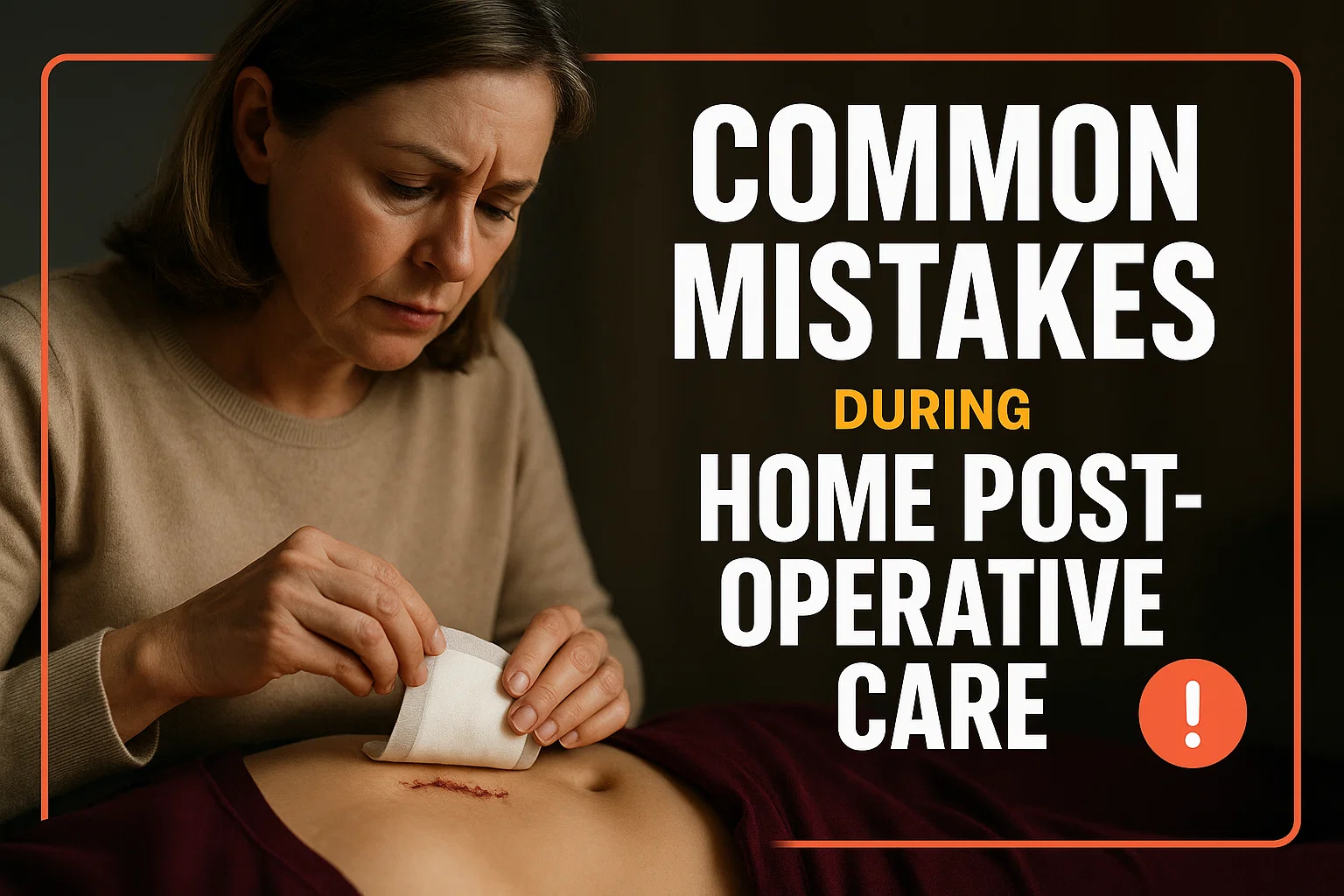
Post-operative recovery at home may be quite a relief; you are finally home and surrounded by comfort and loved ones. What most people fail to realize however is that the recovery period is equally as significant as the surgery itself. What occurs at home is crucial in determining the speed and safety of your body’s healing process.
Unfortunately, most patients or caregivers commit a few errors that may slow the recovery or even lead to complications. These mistakes may transform a simple healing process into a challenging one because of poor cleaning of a wound or even a lack of follow-up visits. This is because knowing what to avoid will guarantee your safe healing and faster recovery.
Why Proper Home Recovery Care Matters After Surgery
Your body requires time, care and attention after a surgery to rebuild and strengthen after the surgery. The hospital offers a monitored setting in which the professionals watch your every step, but at home, this is left to you and your caregiver.
Good home care involves taking good care of your wound by taking good care of yourself: eating good, getting enough rest and keeping your wound clean. Failure to do all these can result in infection, pain or slow healing. This is why it is important to be educated on the typical errors in home care after surgery in order to prevent unjustified complications.
What Happens When Home Recovery Goes Wrong
The recovery process can turn out to be slow or even dangerous in case of the occurrence of errors in the course of post-operative treatment. To illustrate, a relapse can be caused by missing medicines, lack of attention to the characteristics of infection, premature overworking of your body and so on.
It can make the process complicated by a little issue, not getting your house ready before surgery. This is because knowing what will make you avoid will help you keep track and recover in the correct direction.
Common Post-Surgery Home Care Errors to Avoid
Mistakes in the recovery do not always entail an instance of carelessness; in most instances, patients or the caregivers themselves are simply unaware of what to anticipate. They are considered to be some of the most common mistakes that can occur during the home care of a post-surgery patient.
Improper Wound Cleaning Mistakes
The wound after surgery needs special care. The biggest mistake that people commit is improper washing of the wound or using products that irritate the skin.
- Materials or hand hygiene are easily infected.
- Consumption of alcohol, hydrogen peroxide or strong antiseptics may damage the healing tissue.
- Leaving the clothes to be cleaned daily can lead to the proliferation of bacteria.
Proper Wound Care Techniques for Surgical Patients
- Touch your wound before and after washing your hands.
- Clean with cleaning solutions that your doctor prescribes.
- Change the dressings frequently and empty the old ones.
- Note redness, swellings or excessive discharge; this is possible as a result of infection.

Call a doctor immediately in case you get more pain, smell, and fever. The danger of committing the wrong cleaning of the wounds is easily prevented by applying regular and gentle treatment.
Ignoring Infection Symptoms
Everything is postoperative. Ignoring the symptoms of infection is one of the worst errors. Minor details matter.
Early Signs to Watch For
- Fever or chills
- Redness, warmth, or swelling near the incision
- Pus or unusual drainage
- Constant pain that doesn’t improve
One should keep a thermometer ready and should make it a habit to examine the wound each day in order to identify any infection in time. The caregivers should also report any unusual changes at the right moment. To prevent the emergence of bigger problems in the future, it is necessary to maintain temperature and swelling under control.
Medication Timing Issues
Medical drugs are significant in the treatment process especially painkillers, anti-infective drugs, and anti-inflammatory drugs. Yet, timing or dose is confused by most patients.
Common Medication Errors
- Forgetting to take doses on time
- Doubling up after missing a dose
- Mixing medications incorrectly
- Stopping antibiotics too early
Smart Medication Management Tips
- Set phone alarms or use a pill organizer.
- Ask your caregiver to keep track of your medication schedule.
- Always check before taking over-the-counter medicines.
They can be easily addressed with scheduling and reminders in order to avoid medication time problems. Proper intake of your meds means that you keep pain under control and avoid infection.
Missing Follow-Up Appointments
When you begin to feel better, it is easy to believe that you are okay but failure to make follow-up appointments is a big error. Such examinations can help your doctor ensure that your wound is healing in the right manner and that no complications are hidden.
Doctors also visit you to check your blood work, stitch removal and adjust medication. Caregivers are supposed to aid in scheduling and taking patients to appointments without forgetting.
Remember, although you might be fine, it may be your doctor who discovers a problem before it escalates.
Overexertion During Recovery
You might be feeling ready to resume normal life but overworking yourself may slow down the process. The overexertion in the process of recovery may result in pain or reopening the wounds or strained muscles that are still weak.
Avoid These Common Mistakes
- Lifting heavy objects
- Doing housework or chores too early
- Driving before your doctor approves
- Ignoring fatigue and pushing through pain
Take it slow. Rest balance with movement that is not harmful and ensures circulation. Mini-walks or simple stretching can be safe methods of restoring movement slowly as long as they are not harmful to your doctor.
Poor Diet After Surgery
One of the least considered components of recovery is nutrition. Consumption of the wrong foods or their lack can slow down the healing process, suppress immunity and leave you feeling fatigued.
Best Foods for Recovery
- Foods that are rich in proteins such as chicken, eggs, beans and fish, are used to rebuild the tissue.
- Vitamins and antioxidants to combat infection are found in fruits and vegetables.
- Whole grains provide continuous energy in healing your body.
- Enough fluids even make you hydrated and help you circulate.
Do not eat junk food, candy, and processed food. Post-surgical nutrition can be used to reverse progress, whereas healthy diets assist you in recovering sooner and feeling healthier.
Lack of Caregiver Supervision
Several patients attempt to heal themselves without the caregiver’s monitoring and this may cause grave danger. Even such basic activities as bathing, dressing changing, or transfers may become hard after surgery.
Why Caregivers Matter
- They help with hygiene, meals, and medication routine.
- They can identify complications at an early stage.
- They offer emotional encouragement and support.
In case family members are not available, it is a good idea to hire professional caregivers. The home care aides are trained in how to handle recovery safely and offer supervision that is reliable when it is needed the most.
Inadequate Home Preparation
Your house ought to be prepared to meet your requirements before the end of surgery. Most individuals fail to plan, which causes inconvenience or even danger.
How to Prepare Your Home
- Eliminate clutter and loose carpets to avoid falls.
- Prepare a place where you can rest, have easy access to water, medication, and your phone.
- Make sure that there is good lighting, particularly in and around stairs or bathrooms.
- All the necessary stuff should be in easy reach to eliminate bending or stretching.
A poor home preparation policy may bring unnecessary stress. Get ready early so that your home is helpful to recovery.

Skipping Prescribed Physical Therapy
Physical therapy may be recommended by doctors following a surgery to restore strength and flexibility. Nevertheless, a lot of patients miss out on prescribed physical therapy due to exhaustion or believing that they no longer require it.
Missing sessions puts off muscle recovery and may result in muscle stiffness or permanent mobility problems.
Easy methods of being consistent.
- Schedule therapy daily.
- Request a caregiver to assist with reminders and exercises.
- Mark the improvements you make to keep yourself inspired.
Even light therapies make a difference. Exercising helps your body to move and reduces rigidity, and it also allows your body to heal adequately.
Conclusion
After surgery, healing at home is a process that involves patience, consciousness, and attentiveness. With a combination of not making typical home care mistakes, such as not cleaning your wounds, forgetting to take medication, or overly pushing your body, you can be able to heal safely and comfortably.
Keep in mind, with a little planning and appropriate help, a tremendous difference is achieved. Always adhere to the guidance of your physician, have an exercise regimen, and never be shy to seek assistance when it is necessary.
Should you require a loved one or any trusted support in the process of post-operative recovery, caring professionals will be available.
To explore more, visit Precious Pearl Home Care.
FAQs
Among the most frequent errors, there is neglect of the symptoms of infection or neglect of wound care that may result in severe complications.
Adhere to the recommendations of your doctor, usually one to two times a day with clean hands and acceptable materials.
Light movement is encouraged; however, not heavy lifting or rigorous movement without the advice of your doctor.
Consume protein-based, fruit-associated, and vegetable-based foods, and whole grains. Eat no processed and sugary foods, which retard healing.
To prevent problems with medication timing, use a pill organizer, use phone alarms, or have someone take care of you, reminding you to take which dose at which tim