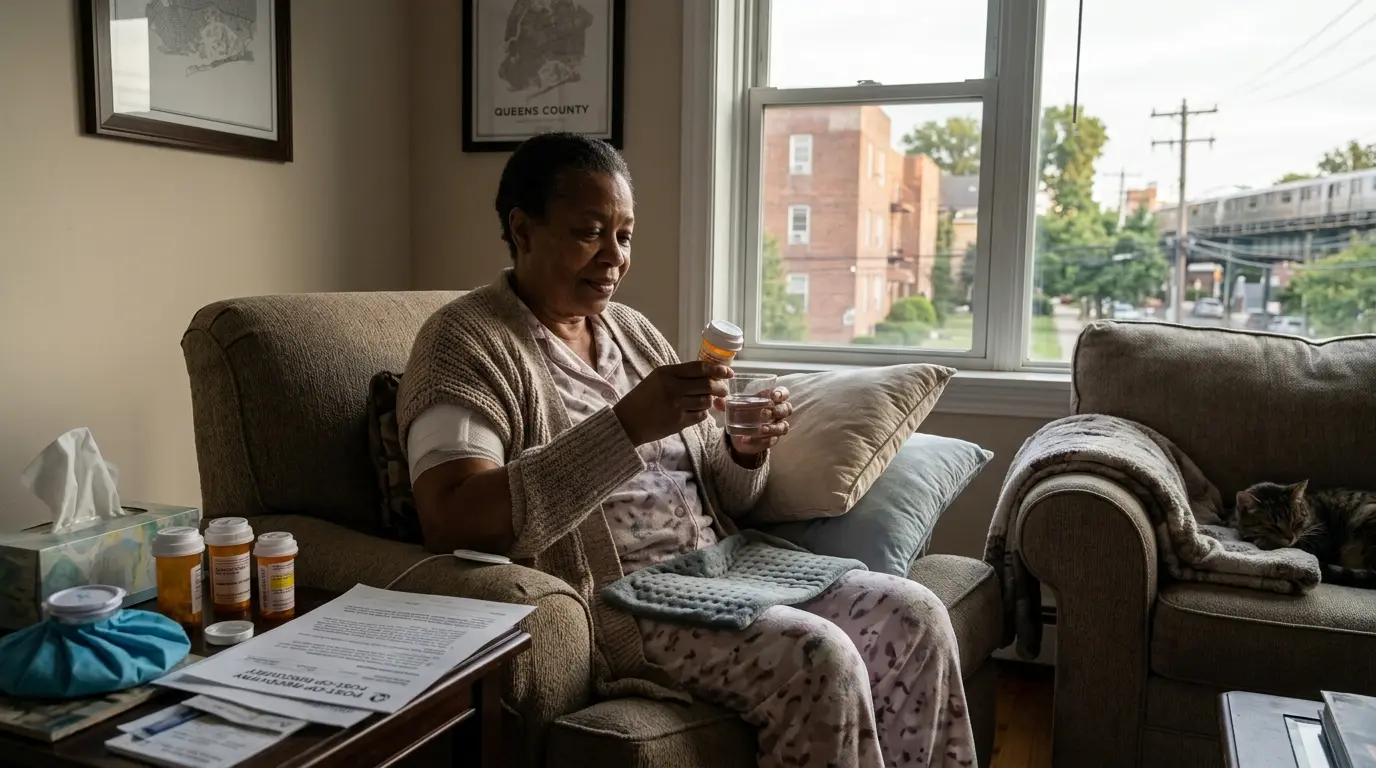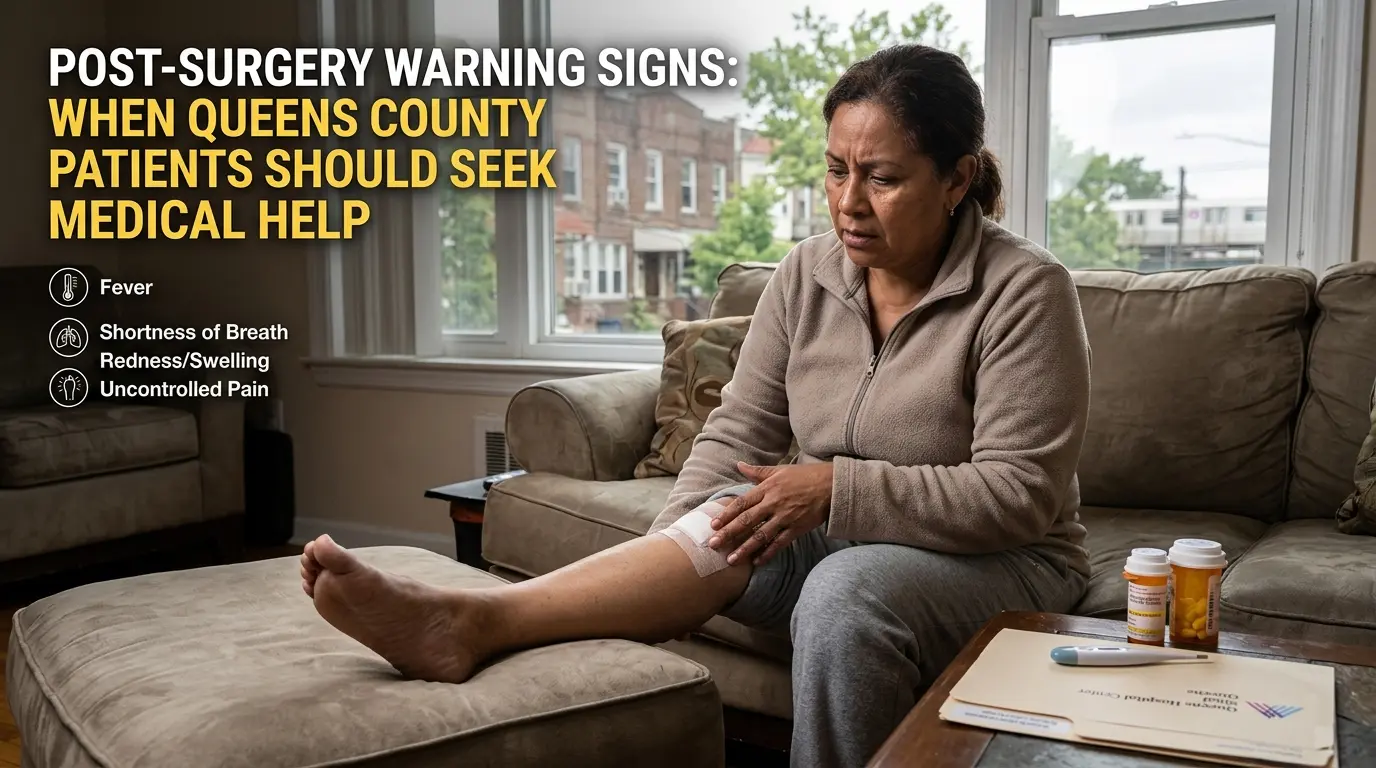
There will be some pain, bruising, fatigue, and swelling following surgery. The tricky part is determining when a change is a normal part of post-operative healing and when it might indicate that something is amiss and requires medical intervention.
For anyone monitoring warning signs after surgery in Queens County, the safest approach is to follow the discharge instructions for the specific procedure and pay attention to symptoms that worsen, appear suddenly, or do not match the expected recovery pattern. This guide provides a summary of the primary signs to look out for, when to alert the surgeon, and when an emergency may require it.
Why Changes During Recovery Deserve Attention
Recovery is not always a straight line. Someone may feel better one day and more sore the next after they have been approved to participate in the activity. However, symptoms should generally follow the pattern explained by the surgical team rather than becoming steadily more severe.
Monitoring pain, temperature, wound drainage, swelling, and surrounding changes can aid in the clear reporting of a problem. This can be particularly helpful during the first few days at home, when a person’s carer might be more attuned to changes that the patient may not be aware of.
Warning Signs That Need Medical Attention
Depending on the type of surgery, the following symptoms may be caused by different factors. These are not instructions for a specific procedure, but are important reasons to seek the advice of a health professional.
Pain That Is Getting Worse Instead of Better
There will be some pain after surgery, especially when moving. A concern that is raised when pain suddenly increases, worsens, or cannot be controlled with the surgeon’s plan. New pain, or pain with other symptoms, or pain felt to be distinctly different from previous post-operative pain, requires immediate medical attention.
Fever, Chills, or Feeling Increasingly Unwell
There can be a number of reasons for a fever following surgery. According to the CDC, the following are symptoms that a surgical site infection may develop: fever, redness, pain, and drainage at the surgical site.
Redness, Warmth, or Swelling Around the Incision
Some swelling or bruising can be expected. The question is whether symptoms are worsening or not. Any redness, increased warmth, swelling, pain, or tenderness around a surgical incision may be a sign of infection after surgery or another complication of healing. Take note of whether the redness is spreading. If the incision is warm and is getting worse, do not postpone treatment because the surgery has recently been done.
Drainage, Pus, Bad Odor, or an Open Wound
It is important that the surgeon gives clear instructions, as there may be some drainage following some of the procedures. If the drainage is thick, cloudy, yellow, green, or smells bad, then it is a warning sign and should be medically attended to.
An incision that opens, deepens, or edges separate may be a sign of wound dehiscence. Never attempt to close or treat a large opening unless instructed to do so. Contact the surgical team promptly.
Bleeding That Does Not Stop or Starts Again
There can be some spotting with some procedures, but a large amount of or continuous spotting is different. Take care of the pressure and dressings according to the instructions for your surgery. Seek urgent medical help if the bleeding is severe, does not stop with the measures your provider had you take, or if you have dizziness, weakness, fainting, or other serious symptoms.
Leg Swelling or Symptoms of a Blood Clot
Surgery and staying still for too long can raise your risk of deep vein thrombosis. If you notice swelling, pain, tenderness, or warmth in one leg, especially if it’s clearly different from your other leg, let your care team know right away. Stick to the mobility and blood clot prevention plan they gave you.
And while not every swollen leg means there’s a blood clot, don’t try to figure it out on your own. Let the professionals decide what’s going on.
When Symptoms Become an Emergency
Some postoperative complications require emergency evaluation rather than waiting for a callback from the surgeon.
Call 911 or seek emergency care for symptoms such as:
- Sudden difficulty breathing or severe shortness of breath
- Chest pain
- Coughing up blood
- Fainting or sudden collapse
- Sudden severe weakness or other serious new symptoms
A pulmonary embolism can occur when a blood clot travels to the lungs and can be life-threatening. Surgery and prolonged immobility are among the factors that can increase the risk.
What Normal Incision Healing May Look Like
Healing doesn’t look the same for everyone, and every surgery leaves its mark a little differently. It’s pretty normal to see some bruising, swelling, or tenderness. The incision might go through a few phases and won’t always look the same as the days pass.
What matters is paying attention if things start to take a turn for the worse. Don’t get hung up on just one symptom. If you notice the redness spreading, the pain getting worse, new or strange drainage, or the wound starting to pull open, it’s time to call your surgeon. MedlinePlus suggests you reach out to your doctor if you have more redness, pain, swelling, bleeding, or any drainage around the wound that worries you.
| Helpful Note: Keep your wound-care instructions handy. Don’t add creams, powders, or anything else to the incision unless your provider says it’s okay. And remember, aftercare can look pretty different depending on where the surgeon worked, so don’t assume all advice applies to your situation. |
A Simple Home Monitoring Checklist
During the recovery period, check the items that your care team has told you to monitor:
- Pain level and whether it is improving, stable, or worsening
- Temperature, if instructed
- New redness, warmth, swelling, or bruising
- Drainage, bleeding, or changes in odor
- Changes in mobility or swelling in the legs
- Nausea, vomiting, hydration, and ability to follow dietary instructions
- The condition of the surgical dressing
- Upcoming follow-up appointments
This checklist is not meant to create anxiety. It can make it easier to spot a meaningful change and give the healthcare provider clear information.
Supporting a Safer Recovery at Home
Taking care of yourself after surgery isn’t just about keeping an eye on your incision. You need to follow all activity restrictions, take your medication exactly as directed, go to your check-ups, and always ask your healthcare team before making any changes to your routine.
Caregiver support can also be valuable when pain, limited mobility, or fatigue makes routine tasks difficult. For families arranging home-based recovery support, Precious Pearls Home Health Care can assist according to the individual care plan while medical concerns remain under the direction of the surgeon and healthcare team.
When to Call the Surgeon vs. Seek Emergency Care
A practical distinction is based on severity and urgency.
Reach out to your surgeon or healthcare provider if you notice more pain at the incision site, redness, swelling, unusual drainage, chills, fever, or if your wound starts to open up. These can all be red flags for infection or other complications, and you want them caught early.
Seek emergency medical care for severe breathing problems, chest pain, coughing up blood, fainting, uncontrolled heavy bleeding, or other sudden life-threatening symptoms. When in doubt about a potentially serious emergency, call 911 rather than attempting to travel alone.
Final Thoughts: Pay Attention to Changes, Not Just Discomfort
Most discomfort after surgery isn’t a big deal, but if something starts to get worse, you shouldn’t ignore it. Keep an eye on your incision, how much pain you’re in, your temperature, any swelling, and your breathing. That way, you and your caregiver can catch signs that your recovery isn’t on track.
For warning signs after surgery in Queens County, procedure-specific instructions from the surgeon should always come first. Precious Pearls Home Health Care can support the day-to-day recovery process, while urgent symptoms and medical concerns should be directed to the appropriate healthcare provider or emergency service.
Frequently Asked Questions
What signs show my incision may be infected?
Look for redness that spreads, growing tenderness, swelling, warmth, fever, pus, or a bad smell. If your incision starts to open up or just doesn’t look right, call your surgeon. Don’t try to self-diagnose; let the professionals decide.
Is a fever after surgery always a sign of infection?
Not always. Fever after surgery can happen for all sorts of reasons, but you shouldn’t brush it off. Stick to the instructions your surgical team gave you, and let them know if you have a fever that won’t go away, or if it comes with chills, growing pain, redness, drainage, or any other troubling symptoms.
How do blood clot symptoms show up after surgery?
Watch out for new pain, swelling, warmth, or tenderness in your leg that can point to a deep vein thrombosis. If you suddenly find it hard to breathe, feel chest pain, pass out, or cough up blood, that’s a red flag for a pulmonary embolism. Don’t wait; get emergency help right away.
Can complications develop several days after surgery?
Absolutely. Some issues don’t show up until you’re back home. Wound infections, for example, can develop after those first few days. Keep following your wound-care instructions and don’t get complacent even if things seem fine at first. If anything seems off or you notice new symptoms, get in touch with your healthcare provider.