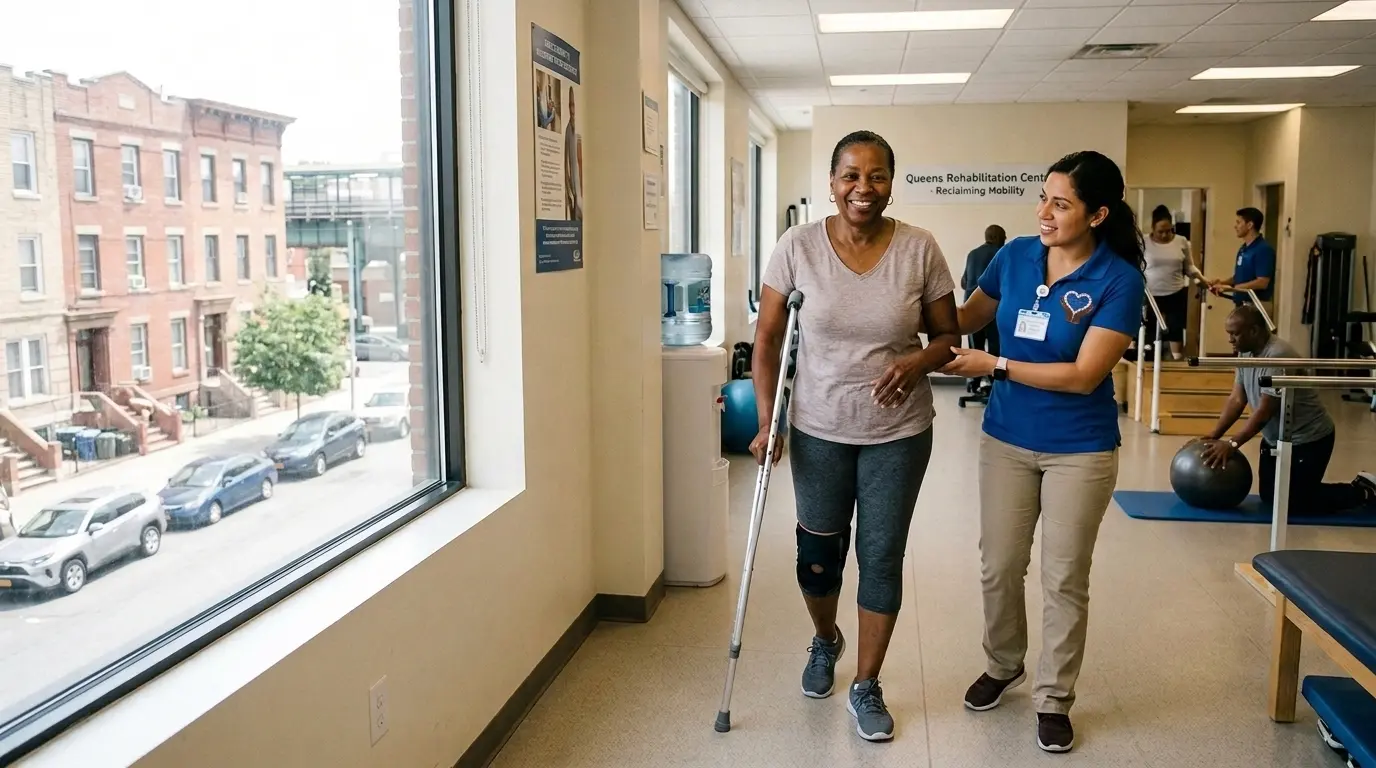
Recovering from surgery can take longer than planned. And even if the procedure itself goes well, pain, swelling, muscle stiffness, weakness, and reduced motion make it easier to struggle with common activities.
The right approach is not about trying to return to normal as quickly as possible. Recovery will also depend on the type of surgery you had, your condition before surgery, what is wrong, and how your body responds to movement. A gradual process can therefore allow you to get back up with strength and function without placing undue strain on the part of your body that is still recovering.
In this guide, we cover how regaining mobility after surgery in Queens County works, along with early movement and walking, physical therapy, home recovery exercises, and some practical ways to make daily tasks safer.
Why Mobility Matters During Surgical Recovery
Though rest is an important component of healing, prolonged inactivity can cause problems of its own. As your care team clears you to be active, light movement can help keep your muscles engaged, improve blood flow, and make everyday activities feel easier as you recover.
That does not mean that each individual needs to follow the same workout. The restrictions someone recovering from joint replacement will experience likely differ greatly from those recovering from a laparoscopic abdominal surgery, for example.
Your Recovery Starts With the Right Restrictions
Things to Check With Your Surgeon or Physical Therapist Before Increasing Activity:
- Weight-bearing limits
- Wound and surgical site care
- Lifting restrictions
- Walking requirements
- Movements to avoid
- Use of braces, crutches, canes, or walkers
- When specific exercises can begin
- When you can return to normal activities
These instructions override general advice, as the safest movement plan will vary with the procedure and the patient’s recovery.
Helpful Reminder: Doing more exercise after surgery is not always better. The aim is to move in a controlled manner in order to promote healing, not to stress the recovering region. |
How Physical Therapy Helps You Regain Movement
Physical therapy can turn general recovery advice into a structured rehabilitation program. A physical therapist can evaluate your existing skills and develop a plan of action for a goal instead of just instructing you to “get more exercise.
Depending on your condition, therapy may focus on:
- Joint flexibility
- Muscle strength
- Balance and coordination
- Walking mechanics
- Functional movement
- Pain management
- Safe use of assistive devices
- Gradual exercise progression
Physical therapy is also important for many orthopedic surgeries to help patients know how to use walkers, crutches, or other devices safely as they regain strength and balance.
Movement Is About Function, Not Just Exercise
A strong recovery plan makes each exercise relevant to everyday movement and to everyday activities. Using a chair to stand, walking through the house, getting into bed, going up and down stairs, and being able to use the kitchen safely can all be part of the recovery plan.
This functional approach matters because being able to perform an exercise does not necessarily mean you are ready to handle the same movement during everyday life.
A Safer Way to Approach Walking After Surgery
One of the first ways of moving when you are recovering from an operation is to walk, but the amount and when you start this depend a lot on the surgery you have had. Physical activity, particularly walking, is encouraged as soon as it is considered safe for the patient, but some patients require more limitations depending on the procedure.
It’s important to do what your health care team says and not to compare yourself to anyone else.
Start With Short, Controlled Movement
If your doctor has given you permission to walk, it may be easier to take a series of shorter walks than one long walk. You may begin with basic movement around your home and gradually increase the distance or duration as your recovery allows.
Pay attention to:
- Were you able to walk with a stable sense of balance?
- If pain worsens while or after working out
- Changes in swelling
- Your energy level
- Whether you need an assistive device
- How well can you maintain your walking pattern
A walker, cane, or crutches are not signs that recovery is going badly. They can help you while you’re working on improving your strength, balance & coordination. Your surgeon or physical therapist will be able to tell you when to decrease or eliminate their use.
Do Not Turn Walking Into a Race
It is common to increase walking distance too fast because the person feels better one day. Recovery is rarely perfectly linear.
If the body responds positively to a specific activity level, progression can be gradual. However, if movement creates extreme pain, large swelling, or other alarming symptoms, you should stop and call your healthcare provider.
Home Recovery Exercises Should Match Your Surgery
There is no universal post-surgery exercise routine that is appropriate for everyone. An exercise that is useful after one procedure may be restricted after another.
For instance, some patients may receive gentle ankle or leg movement during early recovery to promote circulation, and other patients may receive a range of motion exercise for a recovering joint.
Common Categories of Post-Surgery Exercises
A physical therapist may include several types of movement as recovery progresses:
Range of motion exercises: These are used to keep moving the joint or to slowly regain range of motion as appropriate.
Flexibility exercises: These are gentle stretches that can be helpful to deal with stiffness, but typically not without clearance from the surgical team.
Strength exercises: Exercises that focus on building muscle strength when not active are beneficial.
Balance training: These exercises may be relevant if there is an imbalance due to weakness or gait change.
Gait training: Gait changes may require assistance to correct the gait and get patients safely out of assistive devices.
The exact exercises, repetitions, and progression should come from your healthcare professional rather than a generic online routine.
Building a Home Physical Therapy Routine
Recovering at home can be easier when movement becomes part of your normal daily schedule instead of something you only remember occasionally.
Your physical therapist may recommend certain exercises, walking directions, positioning suggestions, and activity guidelines for your home exercise program.
Make the Routine Manageable
Instead of trying to complete a demanding workout, focus on consistency and quality.
A practical routine may involve:
- Completing your prescribed exercises at the recommended frequency.
- Taking short walks when walking is permitted.
- Changing positions regularly instead of remaining still for long periods.
- Taking rest breaks when your body needs them.
- Recording changes in pain, mobility, or swelling.
- Increase activity only when your care team recommends progression.
It is not the goal to leave the end of the session totally exhausted. An appropriate recovery program can assist you in getting better and slowly building up your movement skills.
| Quick Tip: Keep your prescribed exercises somewhere visible. If you are trying to fit in a big workout in one day, a simple written schedule can help you keep track of your movements. |
Making Everyday Movement Safer at Home
Recovering from surgery can make the home environment more difficult. A familiar hallway may feel different when you are using a walker, dealing with weakness, or trying to protect a healing joint.
Avoiding falls is especially important when your balance and coordination have changed.
Check Your Home for Common Hazards
Look for obstacles that might get in the way of safe movement and, before increasing activity, clear them.
- Loose rugs or mats
- Electrical cords across walkways
- Clutter around furniture
- Poor lighting
- Slippery bathroom surfaces
- Items stored too high or too low
- Furniture that makes walker access difficult
Keep frequently used items within easy reach so you do not need to bend, stretch, climb, or make sudden movements that your surgical team has restricted.
If prescribed with an assistive device, ensure that you know how to use it properly. A physical therapist will also be able to assist you with practicing daily activities with your walker, cane, or crutches.
Managing Stiffness, Pain, and Swelling During Recovery
Many surgeries come with the side effects of pain and stiffness, which can make people unwilling to move. Meanwhile, it’s dangerous to exercise through a lot of pain.
Your health care provider might recommend a specific combination of movement, rest, medication, positioning, or other treatments, depending on the procedure.
Listen to Your Body Without Becoming Completely Inactive
You may experience some discomfort as you start to move again, but if new or worsening symptoms occur, they should be addressed. Your surgeon or their team can explain to you what to expect in terms of pain and swelling for your surgery.
Rest is a component of recovery. The goal is to strike the right balance between activity and rest instead of relying on either complete inactivity or constant exercise.
Why Improving Circulation Is Part of Recovery
Movement can also support circulation during the postoperative period. Healthcare staff usually encourage safe movement as soon as possible, as it can reduce the chances of blood clots developing, which can result from being in bed or sitting in place for extended periods of time.
Depending on the procedure and your medical instructions, simple movements may be encouraged early in recovery, such as movements of the ankles or gentle exercises of the leg.
Know the Warning Signs
Avoid exercising when experiencing symptoms that could be a serious complication. Sudden swelling, pain, warmth, or redness of the leg may be indicative of a blood clot and should be treated as a medical emergency. Chest pain or difficulty breathing also requires urgent medical evaluation.
If you don’t know if a symptom is a normal part of healing, consult your healthcare provider instead of self-diagnosing.
Tracking Recovery Milestones Without Comparing Yourself to Others
It takes different amounts of time to recover. Similar procedures can be performed on two different people, and one may go faster than the other due to differences in age, health, procedure complexity, strength, etc.
Rather than concentrating on a calendar, take note of improvements you are able to make and which your health-care team deems functional.
Useful Milestones to Discuss With Your Therapist
Your recovery goals may include being able to:
- Stand from a chair with less assistance
- Walk farther with better stability
- Use an assistive device correctly
- Move a joint through a greater range
- Complete personal care tasks more independently
- Manage stairs safely
- Improve balance and coordination
- Return gradually to normal daily activities
The milestones offer a more helpful view of progress than just asking “how many days or weeks should recovery take?”
When Home Recovery May Need Professional Support
With instructions from their surgical team, some may be able to recover on their own from most of the surgery. Others require extra assistance as a result of limited mobility, being unable to leave home, or needing more complex rehabilitation.
Home physical therapy can be useful when exercises and functional training need to take place in the environment where daily activities actually happen.
A physical therapist can observe how you move around inside your house and assist you in performing practical activities with regard to your limitations.
For patients in Queens County, services from Precious Pearls Home Health Care may provide another option to discuss with the appropriate healthcare professionals when home-based support is part of the recovery plan.
When Should You Increase Your Activity?
The progression should follow a timeline that is based upon your goals for recovery and medical clearance, not the calendar. Some people can walk faster for a short while, and others may need to walk slowly for a longer period of time, depending on the surgery performed and/or complications during recovery.
A useful progression generally moves from basic movement toward more demanding functional activities as strength and mobility improve.
A General Progression
| Recovery Focus | What It May Involve |
| Early movement | Position changes, sitting up, and approved gentle movements |
| Basic mobility | Short walks and safe transfers |
| Movement control | Range of motion and gait training |
| Strength building | Progressive exercises approved by your therapist |
| Functional activity | Stairs, household movement, and daily tasks |
| Return to routine | Gradual return to work, recreation, and normal activities when cleared |
This is a general outline only! Your actual course of treatment could vary significantly based on your type of surgery and medical directions.
Final Thoughts
Regaining mobility after surgery in Queens County is a gradual process rather than a race. Safe movement, appropriate home recovery exercises, physical therapy, and careful attention to activity restrictions can help you work toward better strength, flexibility, balance, and independence.
The most critical step is to adhere to the plan designed for your particular recovery. Exercise within your capabilities, heed your body, monitor recovery goals, and consult your healthcare providers when in doubt about an exercise or activity.
With the right guidance and steady progression, everyday movements can become easier as your body continues through the healing process.
Frequently Asked Questions
How soon can I start walking after surgery?
This will depend on your medical state and the kind of surgery. In some patients, movement restrictions or weight-bearing restrictions are encouraged shortly after surgery, while others are encouraged to begin walking shortly after surgery. Do not compare your recovery time to that of another person; follow your surgeon’s or physical therapist’s orders instead.
What exercises are safe after surgery?
Safe exercises are dependent on the procedure, healing stage, and restrictions from your healthcare team. A rehabilitation program can consist of gentle range of motion exercises, walking, flexibility exercises, strengthening, balance exercises, or gait training, depending on what you need. Never begin new activities without ensuring they’re suitable for your recovery.
Is walking good for post-surgery rehabilitation?
Walking is commonly used during recovery when it is medically appropriate. It can help patients regain functional movement and maintain activity while also supporting circulation. However, the distance, frequency, and weight-bearing level should match the instructions provided for your specific surgery.
How can I prevent falls while recovering at home?
Make walking routes easy to pass, eliminate loose rugs, provide adequate lighting, and make commonly used items easily accessible. Properly use an assistive device and seek physical therapist feedback on walking technique if unsure.
When does mobility usually return after surgery?
There is no universal recovery time. The timeframe is determined by the procedure, health, possible complications, initial degree of strength, and regimen of rehabilitation. Progress can be more clearly measured by milestones of recovery – better walking, range of motion, strength, and independence – rather than weeks.
Can physical therapy help with muscle stiffness after surgery?
Yes, physical therapy can help to improve stiffness by implementing proper movements, range of motion exercises, strengthening, and functional training. Specific approach may vary according to the cause of stiffness and which movements are acceptable to the surgical site.